5 يوليو 2026 · 9 blog.minRead · methodology
Quantifying Home Advantage — How to Build It Into Your Football Prediction Model
July 5, 2026 · 9 min read
Home advantage is one of the most persistent phenomena in football. Teams have won roughly 45-46% of home matches for over a century. But what exactly drives it, how much is it worth in goals, and how do you bake it into a prediction model? This guide breaks down the research and gives you practical formulas.
What Is Home Advantage, Exactly?
Home advantage is the measurable edge a team gains by playing at its own stadium. In top European leagues, the historical split hovers around 45-46% home wins, 26-27% away wins, and 27-28% draws. That might not sound dramatic, but over a 38-match season, it translates to roughly 5-7 extra points for a mid-table team — enough to swing a relegation battle or a European qualification spot.
The effect is not unique to football. It appears in virtually every team sport. But football's low-scoring nature makes it particularly impactful: a single goal often decides the outcome, and even a small edge in goal expectancy changes the probability distribution significantly.
The Numbers: How Big Is Home Advantage?
A 2006 study by The Times found that in the English Premier League, home teams scored 37.29% more goals than away teams. More granular data from recent seasons tells a consistent story:
| Metric | Typical Value |
|---|---|
| Home win rate | 45-47% |
| Away win rate | 26-30% |
| Draw rate | 25-28% |
| Home goals per game (EPL avg) | ~1.55 |
| Away goals per game (EPL avg) | ~1.20 |
| Raw home advantage (goals) | +0.35 to +0.45 |
The key takeaway: home advantage is worth roughly 0.3 to 0.45 goals per match across major leagues. In Elo terms, that translates to about 50-100 rating points — enough to flip a coin-flip match into a 55-60% favorite.
What Drives Home Advantage?
Research points to four main factors, with one surprising leader:
1. Referee Bias (The Biggest Factor)
A landmark Harvard study by Ryan Boyko analyzed 5,000 English Premier League matches from 1992 to 2006. The finding that surprised many: for every additional 10,000 fans in attendance, the home team received an advantage worth +0.1 goals. Home teams also won more penalty kicks, and the effect was strongest with less experienced referees.
Sports Illustrated's 2011 analysis went further, concluding that referee bias is the primary driver of home advantage — not travel fatigue, pitch familiarity, or crowd support in isolation. Officials are "unwittingly and psychologically influenced by home crowds," making slightly friendlier calls on 50-50 decisions.
2. Crowd Effect
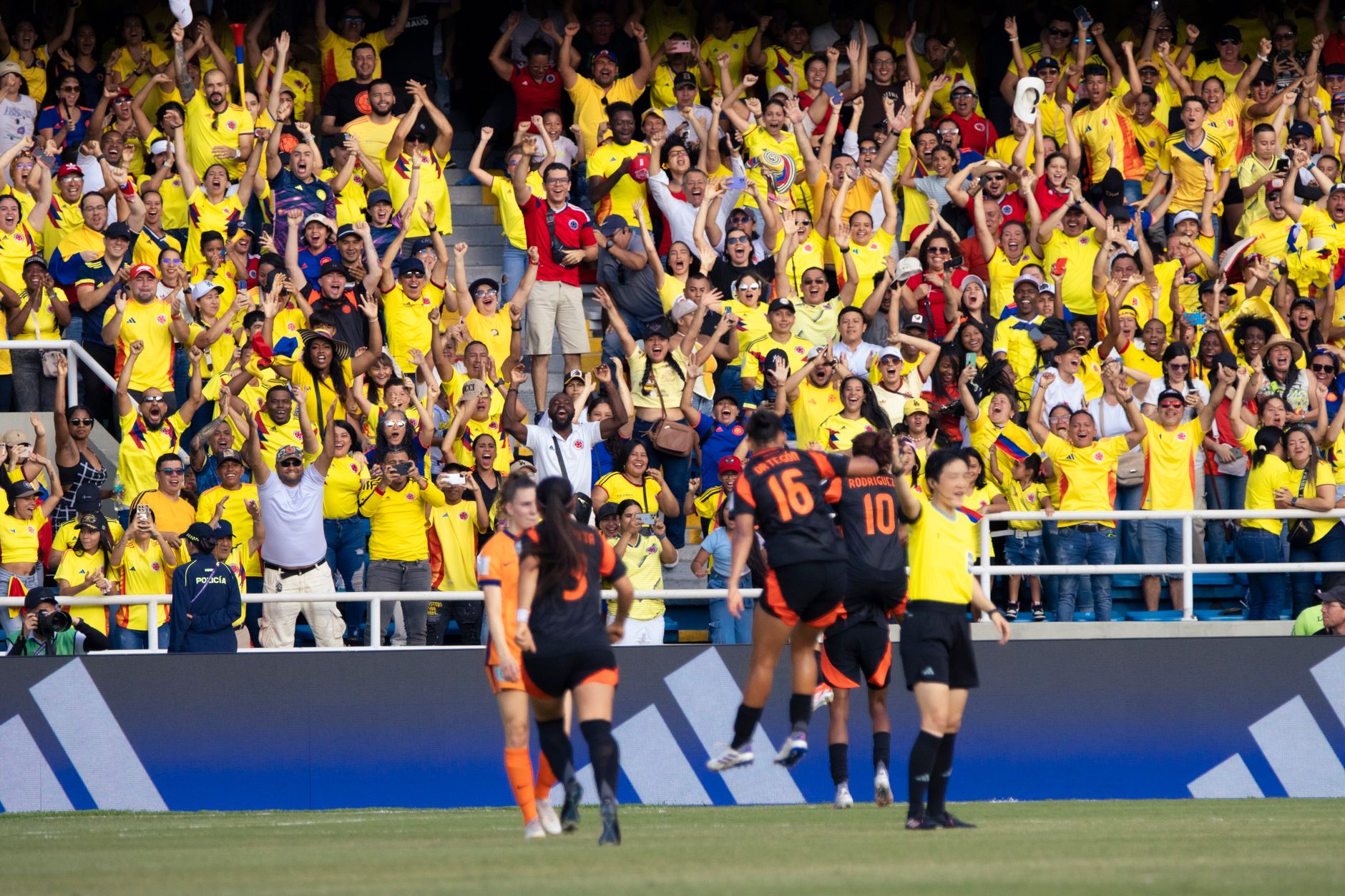
The home crowd acts as a psychological amplifier. Players report higher testosterone levels during home matches — a finding consistent with evolutionary research on territorial defense. Goalkeepers show particularly strong hormonal changes when facing bitter rivals. The crowd also creates pressure on opponents: hostile environments in Istanbul, Buenos Aires, or Belgrade can rattle even elite players.
3. Travel and Fatigue
Away teams deal with time zone changes, disrupted routines, unfamiliar hotels, and the simple physical toll of travel. In domestic leagues this effect is moderate, but in continental competitions — where teams might fly across multiple time zones — it becomes more pronounced. Bolivia's national team famously leverages 3,600-meter altitude in La Paz to devastating effect, beating Brazil and thrashing Argentina 6-1 in World Cup qualifying.
4. Familiarity
Home players know every blade of grass — the bounce of the ball on their pitch, the dimensions of the dressing room, the walk from the tunnel. It sounds intangible, but at the elite level, marginal gains matter. Teams also sleep in their own beds and follow their normal routines.
The COVID Natural Experiment
The 2020-21 pandemic gave researchers an unprecedented natural experiment: what happens when you remove crowds entirely?
The results were striking. In Italian Serie A and Serie B, researchers Vandoni et al. (2022) found that home advantage decreased significantly in empty stadiums compared to 2018-19. A study of the Brazilian Soccer League by Dellagrana et al. (2023) showed home teams earned 66.6% of points with crowds vs. 57.2% without — a drop of nearly 10 percentage points.
In the NHL, home teams saw a 10% decline in win rate during the 2020-21 restricted-attendance season. Road teams' win rates jumped by 7%.
The COVID data confirms what models have long assumed: crowd presence accounts for roughly half of total home advantage. Removing fans cuts the effect by 40-60%, depending on the league.
For prediction modelers, this is gold dust. It means your home advantage coefficient should not be a fixed constant — it should flex based on expected attendance, stadium atmosphere, and whether the match is behind closed doors.
Home Advantage by League
Not all leagues are equal. Marek and Vávra's 2020 study compared home advantage across European top-level leagues from 2007/08 to 2016/17 and found significant variation:
- Turkish Süper Lig / Greek Super League: Highest home advantage (~+0.50 goals) — passionate crowds, hostile atmospheres, significant travel distances
- English Premier League: Moderate (~+0.35-0.40 goals) — consistent decline from historical highs
- German Bundesliga: Moderate (~+0.35 goals) — large stadiums with standing sections create strong atmospheres
- Spanish La Liga: Moderate (~+0.34 goals) — less variation between top and bottom clubs
- French Ligue 1: Lower (~+0.32 goals) — arguably the weakest home advantage among top-5 leagues
The trend is clear: home advantage has been declining for over a century. In the 1880s, home teams won roughly 60% of matches. Today it's closer to 45%. Improved travel, professionalized away preparation, VAR technology, and better refereeing standards have all contributed.
Neutral Venues and World Cup Dynamics
World Cup matches are played at "neutral" venues, but true neutrality is rare. Host nations enjoy substantial advantages — victories by Uruguay (1930), Italy (1934), England (1966), Germany (1974), Argentina (1978), and France (1998) are all partly attributed to hosting.
But the 2022 Qatar World Cup offered a counter-example: the host was eliminated in the group stage with three losses — the earliest host elimination in tournament history. And in the 2026 World Cup, with matches spread across the United States, Canada, and Mexico, the "home" advantage is diluted: the US has three host nations but matches are spread across 16 cities spanning four time zones.
For knockout stage predictions, the key insight is: when neither team is the host, home advantage shrinks to near zero. But when one team has significant fan support at a venue (e.g., Mexico playing in Mexico City), a meaningful edge remains. Your model should account for expected crowd composition, not just which team is listed as "home."
Building Home Advantage Into Your Model
Here are four practical approaches, from simple to sophisticated:
Method 1: Separate Home/Away Goal Averages
The simplest approach: use different league averages for home and away teams. Instead of one "league average goals" figure, use:
- league_avg_home_goals = ~1.55 (EPL)
- league_avg_away_goals = ~1.20 (EPL)
Then calculate expected goals as:
λ_home = home_team_attack × away_team_defense × league_avg_home_goals
λ_away = away_team_attack × home_team_defense × league_avg_away_goals
Home advantage is baked into the different averages — no extra parameter needed.
Method 2: Dixon-Coles Gamma Parameter
The gold standard for football prediction models since 1997. Dixon and Coles introduced a multiplicative home advantage parameter (γ, gamma):
μ_home = α_home × β_away × γ
μ_away = α_away × β_home
Where α = attack strength, β = defense weakness, and γ ≈ 1.20-1.35 depending on the league. A gamma of 1.25 means the home team's expected goals are boosted by 25%. The model also includes a "tau correction" for low-scoring games (0-0, 1-0, 0-1, 1-1) where Poisson distributions tend to underperform.
Method 3: Elo Home Bonus
Elo-based models add a fixed bonus to the home team's rating before calculating expected outcome:
expected = 1 / (1 + 10^((R_away - R_home - HFA) / 400))
The World Football Elo Ratings system uses HFA = +100 points. FiveThirtyEight's SPI model used roughly +65 points for domestic leagues. The rule of thumb: 250 Elo points ≈ 1 goal, so 65-100 points equals 0.26-0.40 goals — consistent with other methods.
Method 4: Regression with Home Dummy
For machine learning models, include a binary is_home feature or a league-specific home advantage value. In a Poisson regression, the coefficient on the home dummy gives you the estimated home advantage directly from your data. This approach is flexible: you can add interaction terms (home × crowd_size, home × altitude) to capture more nuanced effects.
Refining Your Home Advantage: Beyond a Single Number
A single home advantage coefficient is a starting point, not the finish line. Here's how to make it more accurate:
- League-specific values: Don't use the same HFA for the Turkish Süper Lig and Ligue 1. Calibrate separately for each league.
- Crowd-adjusted HFA: Reduce the coefficient for behind-closed-doors matches by 40-60%. For partially attended matches, scale proportionally.
- Altitude/climate extremes: Apply a separate bonus for high-altitude venues (La Paz, Quito, Bogotá) and extreme heat/humidity.
- Temporal decay: Home advantage has declined over decades. Your historical data should weight recent seasons more heavily.
- Team-specific effects: Some teams have stronger home records than others — large stadiums, hostile atmospheres, or unusual pitch dimensions can amplify the baseline.
Key Takeaways
- Home advantage is worth +0.30 to +0.45 goals per match across top European leagues, or +50 to +100 Elo points.
- Referee bias is the single largest driver — crowds influence officials on 50-50 calls, giving home teams more favorable decisions and penalty kicks.
- COVID-era empty stadiums proved that crowd presence accounts for roughly half of total home advantage. Removing fans cut the effect by 40-60%.
- Home advantage varies significantly by league: Turkey and Greece (~+0.50 goals) at the top, France (~+0.32) at the bottom among top-5 leagues.
- The effect has been declining for over a century — from ~60% home wins in the 1880s to ~45% today.
- For World Cup knockout matches at neutral venues, home advantage drops to near zero — unless one team has dominant crowd support at the venue.
- Use league-specific, crowd-adjusted home advantage values rather than a single global constant for best results.