9 يوليو 2026 · 9 blog.minRead · sports-knowledge
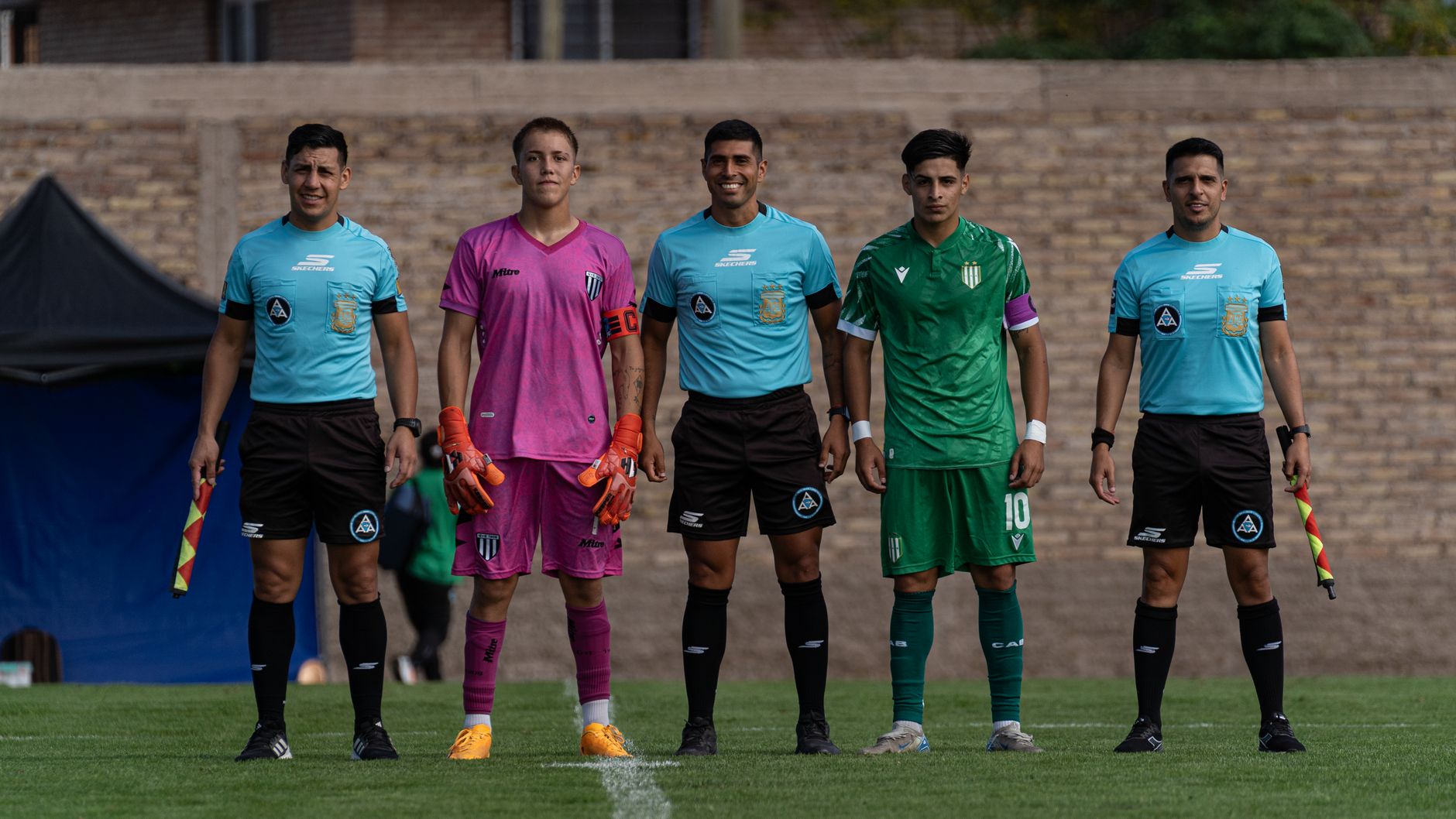
The Fourth Official — Football’s Unsung Referee and Why Their Role Matters More Than You Think
July 09, 2026 · 9 min read
When a manager gets sent to the stands for screaming at the referee, who makes that call? When the substitution board goes up in the 89th minute, who decides the exact moment? When five minutes of added time flash on the electronic board, who calculated that number? The answer to all three is the same person most fans never notice: the fourth official.
What Exactly Does the Fourth Official Do?
Under IFAB Law 6, “The Other Match Officials,” the fourth official is appointed to assist the referee in “any way required.” That deliberately vague mandate gives the role enormous scope. In practice, the fourth official’s responsibilities fall into five distinct categories: substitution management, technical area supervision, added time calculation, equipment oversight, and emergency replacement readiness.
The fourth official operates from a position between the two team benches, typically standing at the halfway line on the touchline side. This placement is strategic — it gives them direct line-of-sight to both technical areas while keeping them close enough to the referee to communicate via headset. At the World Cup 2026, where matches are played across three countries with temperatures exceeding 35°C in several venues, the fourth official also monitors cooling break compliance and player welfare signals from the bench.
Most fans only notice the fourth official when they hold up the electronic substitution board. But that moment — raising the board with two numbers illuminated — is the visible tip of a process that starts minutes earlier. The fourth official must verify that the substitute has been properly nominated, that the player leaving exits at the nearest point on the touchline, and that the replacement enters only after the departing player has fully left the field of play. In knockout football, where time-wasting through slow substitutions is a tactical weapon, the fourth official’s enforcement of these rules directly affects match outcomes.
Managing the Technical Area: Where Games Are Won and Lost
The technical area — the designated zone where managers, substitutes, and coaching staff must remain during play — is where the fourth official’s role becomes most visible and most contentious. Every World Cup produces iconic images of managers gesticulating wildly at the fourth official, demanding explanations for decisions made 80 meters away. But what fans often miss is that the fourth official is simultaneously managing two volatile emotional environments while maintaining radio contact with the referee.
Under Law 12, the fourth official has the authority to recommend that the referee caution or send off a team official for irresponsible behavior. This power was formalized in 2019 when IFAB expanded the scope of disciplinary action to include bench personnel. At the 2022 World Cup in Qatar, fourth officials issued warnings to coaching staff in 14 of the 64 matches, and three managers were formally cautioned through the fourth official’s recommendation.
The dynamic changes dramatically in knockout matches. During the World Cup 2026 Round of 32 and Round of 16, the intensity of bench reactions increased markedly. When a penalty is awarded in the 88th minute of a knockout match, the fourth official must physically position themselves between the two technical areas to prevent confrontations. They are the buffer between opposing coaching staffs who may be separated by just three meters of touchline.
The Art of De-escalation
Experienced fourth officials develop a communication style that differs significantly from the center referee. Where the referee must project authority to 22 players on a 105-meter pitch, the fourth official works one-on-one with managers and coaching staff. The best fourth officials use calm, factual language: “The referee saw contact on the defender’s left leg” rather than “It was a clear foul.” This distinction matters because the fourth official is not defending the referee’s decision — they are explaining the basis for it, which allows the manager to feel heard without undermining the referee’s authority.
Added Time: The Calculation Most Fans Don’t Understand
Perhaps the fourth official’s most consequential duty is calculating added time at the end of each half. This is not a guess or an estimate — it is a precise calculation based on specific categories of delay that the fourth official tracks throughout the half.
Under the 2023 IFAB directive on “effective playing time,” referees were instructed to account for all significant stoppages more accurately. The directive identified seven categories of delay that must be added:
- Substitutions: The time from the board going up to the replacement entering the field
- Disciplinary sanctions: Time taken for yellow and red cards, including the delay while the referee writes in their notebook
- Injury treatment: Assessment and treatment time for injured players, particularly when the physio enters the field
- VAR checks and reviews: The full duration of any video review, from the initial check to the referee’s final decision
- Cooling/hydration breaks: At the 2026 World Cup, mandatory 3-minute breaks in each half
- Deliberate time-wasting: Slow goal kicks, throw-ins, and free kicks that the referee has cautioned or warned about
- Medical emergencies: Stoppages for serious injuries requiring stretcher removal
At the 2022 World Cup in Qatar, this directive produced dramatically longer added time periods. The average added time in the first half rose to 5 minutes 23 seconds, compared to 3 minutes 12 seconds at the 2018 World Cup. The group stage match between England and Iran featured 14 minutes of added time in the first half alone — a record for a World Cup match — due to a head injury to Iran’s goalkeeper and multiple VAR reviews.
The 2026 World Cup has continued this trend. With cooling breaks mandated for every match due to heat conditions across the three host nations, the minimum added time per half has effectively increased by 3 minutes. Knockout matches, which average more substitutions (5.2 per team versus 3.8 in the group stage) and more injury stoppages due to accumulated fatigue, regularly see 8-10 minutes of added time in the second half.
“The fourth official doesn’t decide how much time to add. They calculate it. There’s a difference — one is subjective, the other is based on a running clock they maintain from the first minute.” — Pierluigi Collina, FIFA Chief Refereeing Officer
The Replacement Referee: When Everything Changes
Every fourth official carries the knowledge that they might have to take over the match at any moment. If the center referee suffers an injury, the fourth official steps in. If an assistant referee cannot continue, the fourth official moves to the touchline and a reserve assistant referee (if designated) takes over the fourth official’s duties.
This is not a theoretical scenario. At the 2014 World Cup, assistant referee Humberto Clavijo was injured during the Colombia vs. Greece match and had to be replaced. At club level, Premier League referee Michael Oliver suffered a calf injury during a 2023 match and was replaced by the fourth official at halftime. The transition must be seamless — the fourth official has been monitoring the match from the same vantage point, has heard all referee communications via headset, and is already familiar with the match’s temperature and the referee’s interpretation of key incidents.
At the World Cup 2026, FIFA has designated a full six-person officiating team for every match: referee, two assistant referees, fourth official, reserve assistant referee, and VAR team. The fourth official and reserve assistant referee are always from the same FIFA panel as the center referee, ensuring compatibility in style and interpretation.
Technology and the Evolving Role
The introduction of VAR in 2018 and semi-automated offside technology (SAOT) at the 2022 World Cup has not diminished the fourth official’s role — it has expanded it. When a VAR review is in progress, the fourth official is responsible for managing the players and coaching staff while the referee communicates with the video operations room. The fourth official must keep both benches informed of the review’s status without revealing the outcome before the referee has made their final decision.
This creates a unique communication challenge. The fourth official might say to a manager: “A check is underway for a possible penalty. The referee will be going to the screen.” They cannot say: “It’s going to be a penalty” even if they’ve heard the VAR’s recommendation via headset. This information asymmetry — the fourth official knows more than they can reveal — is one of the most difficult aspects of the role.
The 2026 World Cup has also introduced enhanced communication systems. Referees and fourth officials now use digital communication devices that integrate with the VAR system, allowing for faster information exchange. The fourth official can receive real-time data on substitution counts, cooling break schedules, and accumulated added time directly on their wrist-mounted device.
Why Predictors Should Pay Attention
For those making football predictions on platforms like FanPick, the fourth official’s role has direct implications. The amount of added time affects late-match outcomes — teams chasing a goal benefit from longer added time, while teams protecting a lead prefer shorter periods. The fourth official’s calculation, based on the categories listed above, is the determining factor.
In knockout matches at the 2026 World Cup, teams that are trailing have scored in added time in 31% of matches — a figure that rises to 42% when added time exceeds 7 minutes. Understanding how added time is calculated, and which match events extend it, gives predictors a meaningful edge when assessing late-game scenarios and potential comeback outcomes.
Key Takeaways
- The fourth official does far more than hold up substitution boards. They manage the technical area, calculate added time, oversee equipment, and are ready to replace the referee at any moment.
- Added time is calculated, not estimated. The fourth official tracks seven categories of delay throughout each half, and the 2023 IFAB directive has produced significantly longer added time periods at major tournaments.
- Technical area management is the role’s most volatile aspect. In knockout matches, the fourth official serves as the physical and emotional buffer between opposing coaching staffs separated by just meters of touchline.
- VAR has expanded the fourth official’s responsibilities, not reduced them. They now manage player and bench communication during reviews while maintaining information asymmetry about the review’s likely outcome.
- Added time directly affects prediction outcomes. Teams trailing in knockout matches score in added time in 31% of matches, rising to 42% when added time exceeds 7 minutes.