17 يونيو 2026 · 9 blog.minRead · sports-knowledge
World Cup 2026 Qualification — How 48 Teams Earned Their Place
June 17, 2026 · 14 min read
Two hundred and six nations entered. Eight hundred and ninety-nine matches were played. Two thousand five hundred and twenty-seven goals were scored. The 2026 FIFA World Cup qualification campaign spanned two and a half years across every continent — and it produced more drama, more first-timers, and more heartbreak than any qualifying cycle in history.
The Expansion: From 32 to 48 Teams
The 2026 FIFA World Cup in the United States, Mexico, and Canada is the first to feature 48 teams in the final tournament — a 50% increase from the 32-team format used since 1998. FIFA approved the expansion in January 2017, and with it came a complete overhaul of the qualification system.
The new format means more nations have a realistic path to the World Cup than ever before. But it also means the qualification process became longer, more complex, and more geographically diverse. Six confederations ran their own qualifying tournaments, 206 teams competed over 899 matches, and the campaign stretched from September 2023 to March 2026 — a staggering 31-month journey.
Slot Allocation: Who Gets How Many?
The 48 spots were divided among FIFA’s six confederations. The allocation was approved by the FIFA Council in May 2017 in Manama, Bahrain, and it represented a significant shift in how football’s global pie is sliced:
| Confederation | Direct Slots | Play-off Slots | Total |
|---|---|---|---|
| UEFA (Europe) | 16 | 0 | 16 |
| CAF (Africa) | 9 | 1 | 9 (+1 play-off) |
| AFC (Asia) | 8 | 1 | 8 (+1 play-off) |
| CONMEBOL (South America) | 6 | 0 | 6 |
| CONCACAF (North/Central America) | 3 (+3 hosts) | 1 | 6 (+1 play-off) |
| OFC (Oceania) | 1 | 1 | 1 (+1 play-off) |
The most historic change: the OFC received its first-ever guaranteed berth at a World Cup. Previously, Oceania’s champion had to win an intercontinental play-off to qualify — a hurdle that kept nations like New Zealand and Australia (before their AFC switch) on the edge for decades.
CONMEBOL: South America’s Marathon
South America’s qualification is the longest and most grueling in world football. All 10 CONMEBOL nations play each other home and away in an 18-match round-robin — and with six direct slots now available (up from 4.5 in 2022), the pressure eased slightly.
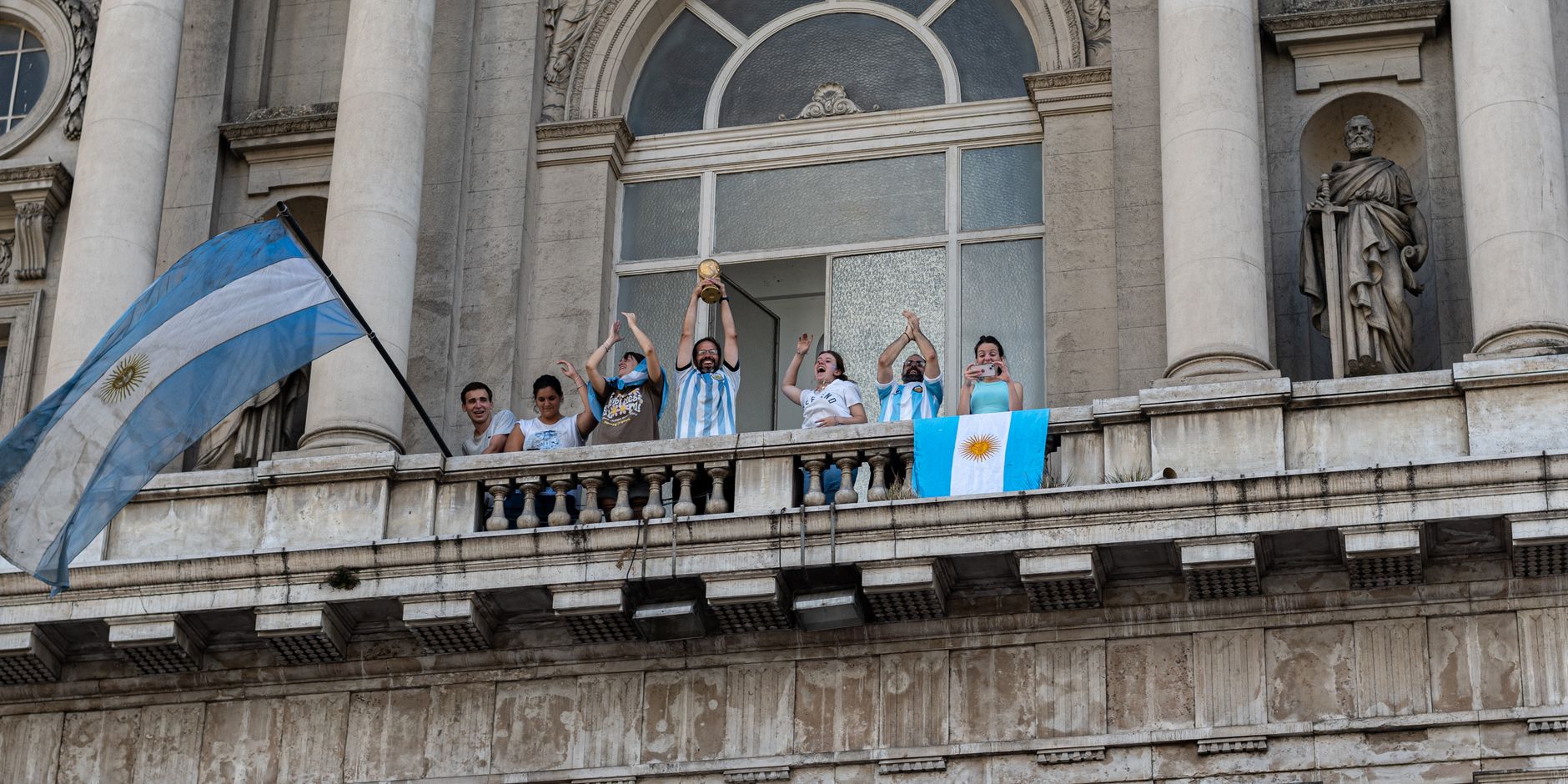
Argentina qualified first on March 25, 2025, topping the table with the clinical efficiency that has defined the Lionel Messi era and beyond. Ecuador finished second, while Colombia, Uruguay, Brazil, and Paraguay filled the remaining spots. Brazil’s qualification in fifth place marked their worst-ever qualifying campaign finish — a sign of the struggles that have plagued the five-time champions.
UEFA: Europe’s Crowded Field
Europe’s 16 direct spots were contested by 54 nations (Russia was suspended following the invasion of Ukraine). The qualification format featured 12 groups of 4–5 teams, with group winners qualifying directly. The 12 runners-up, plus the four best-ranked group winners from the 2024–25 UEFA Nations League who did not finish in the top two of their qualifying group, entered a play-off path for the final four spots.
England were among the first to book their place, winning Group K on October 14, 2025. France followed on November 13, 2025, winning Group D. Traditional powers like Germany, Spain, the Netherlands, and Portugal all qualified through their groups, while some — including Italy — needed the play-off route.
CAF: Africa’s Golden Expansion
Africa received the biggest boost in the expansion — jumping from 5 slots in 2022 to 9 direct slots plus a play-off berth. The CAF qualification process ran through group stages, with 9 group winners qualifying directly.
The campaign produced several landmark moments. Cape Verde qualified for the first time in their history by winning Group D on October 13, 2025 — an extraordinary achievement for an island nation of just 600,000 people. Morocco, who reached the semi-finals in 2022, qualified comfortably as Group E winners. South Africa returned to the World Cup for the first time since hosting in 2010, while Algeria made it back after missing 2022.
AFC: Asia’s Rising Powers
Asia’s 8 direct slots (up from 4.5) meant more Asian nations at the World Cup than ever before. The AFC qualification ran through multiple rounds, with the final round featuring three groups of six teams.
Japan were the first Asian team to qualify, winning Group C on March 20, 2025 — their eighth consecutive World Cup appearance. Iran followed as Group A winners, while South Korea won Group B. Uzbekistan and Jordan both qualified for the first time in their histories, finishing as runners-up in their groups. Australia took the final direct spot as Group C runners-up.
The fourth round saw Qatar and Saudi Arabia earn their places through mini-group play-offs, with Qatar successfully navigating a qualifying campaign for the first time (their 2022 appearance was as hosts).
CONCACAF: The Hosts and the Challengers
With three host nations (USA, Mexico, Canada) automatically qualified, CONCACAF had just 3 additional direct slots to fill. The regional qualification was therefore highly competitive, with nations like Panama, Jamaica, and Haiti securing their places through the CONCACAF qualifying tournament.
The hosts’ automatic qualification is a double-edged sword: while it guarantees World Cup football, it also means they enter the tournament without the competitive sharpness that comes through qualifying matches. History shows this can be a disadvantage — host nations without qualifying campaigns often start slowly.
OFC: Oceania’s Historic Moment
For the first time in FIFA World Cup history, the Oceania Football Confederation received a guaranteed direct spot. New Zealand won the OFC third-round qualification on March 24, 2025, booking their place at a World Cup for just the third time (after 1982 and 2010).
The guaranteed OFC berth is one of the most significant changes in the expansion. Previously, Oceania’s representative had to survive intercontinental play-offs against teams from stronger confederations — a gauntlet that often proved insurmountable. Now, at least one Oceanian nation is guaranteed to play on the world’s biggest stage.
Intercontinental Play-offs: The Last Dance
The final two World Cup spots were decided through intercontinental play-offs held in March 2026. Six teams from four confederations competed in a mini-tournament:
- CAF: 1 team (best-ranked runner-up)
- AFC: 1 team (best-ranked runner-up)
- CONCACAF: 1 team (best-ranked non-qualifier)
- OFC: 1 team (runner-up)
- CONMEBOL: 1 team (7th place)
- UEFA: 1 team (play-off runner-up)
These play-offs are a pressure cooker — single-leg matches where one bad day ends a nation’s World Cup dream. The format ensures that every confederation still has a stake in the final qualifying weekend.
First-Timers and Record-Breakers
The 2026 qualifying cycle produced an unprecedented number of World Cup debutants:
- Cape Verde — Population: 600,000. The smallest African nation ever to qualify. Won their CAF group outright.
- Curaçao — Population: 150,000. The smallest nation ever to qualify for a FIFA World Cup. A Caribbean island that punches far above its weight.
- Jordan — Qualified via the AFC third round, becoming the first Jordanian team to reach the World Cup finals.
- Uzbekistan — After decades of near-misses in Asian qualification, Uzbekistan finally broke through with a second-place finish in AFC Group A.
These debutants represent the expansion’s greatest promise: more nations, more diversity, more stories. When Cape Verde take the field in June 2026, they’ll carry the hopes of an entire island chain.
The Numbers Behind the Campaign
The 2026 qualification campaign was a statistical marathon:
- 206 teams entered qualification from 6 confederations
- 899 matches were played across 31 months
- 2,527 goals were scored — an average of 2.81 per match
- 15,626,580 fans attended matches — an average of 17,382 per game
- Erling Haaland (Norway) was the top scorer with 16 goals, though Norway failed to qualify
- Iraq had the longest campaign, playing 21 matches over 28 months
Erling Haaland scored 16 goals in qualifying — more than any other player — yet Norway failed to reach the World Cup. It’s the cruellest individual-vs-team paradox in football.
Who’s Missing? Notable Absences
Every World Cup has its casualties, and 2026 is no different. Several footballing nations with rich World Cup histories will be watching from home:
- Russia — Suspended from FIFA and UEFA competitions since February 2022 due to the invasion of Ukraine. Their absence is political, not sporting.
- Norway — Despite Haaland’s 16 goals, Norway couldn’t navigate a tough UEFA group. Individual brilliance isn’t enough in European qualifying.
- Italy — The four-time champions needed the play-off route after finishing second in their group, adding to their recent qualifying struggles (they missed 2018 entirely).
What the Expansion Means for the Tournament
The 48-team format fundamentally changes the World Cup. Instead of 32 teams in 8 groups of 4, the 2026 tournament features 12 groups of 4, with the top two from each group plus the eight best third-placed teams advancing to a 32-team knockout round.
This means:
- More matches: 104 total games, up from 64 in 2022
- More knockout drama: 32 teams in the round of 16 (up from 16)
- More representation: Every continent has multiple teams, creating truly global match-ups
- Longer tournament: 39 days, from June 11 to July 19, 2026
Key Takeaways
- More diversity than ever: Four nations qualified for the first time (Cape Verde, Curaçao, Jordan, Uzbekistan), and the OFC has a guaranteed spot for the first time in history.
- Africa and Asia benefit most: CAF jumped from 5 to 9+ slots, AFC from 4.5 to 8+ — the biggest power shift in World Cup allocation history.
- Qualification is a marathon: 899 matches over 31 months. Iraq played 21 matches to qualify. The campaign tested squad depth, coaching stability, and national commitment like never before.
- Individual brilliance doesn’t guarantee team success: Haaland scored 16 goals but Norway stayed home. Football remains the ultimate team sport.
- The expansion opens doors: Nations like Cape Verde (population 600,000) and Curaçao (150,000) now have pathways that were unthinkable under the old 32-team format.
The 2026 FIFA World Cup qualification campaign was the most extensive in football history — and the most inclusive. From Buenos Aires to Baku, from Cairo to Cape Verde, 206 nations chased 48 dreams. The journey is over. The tournament begins.