৮ জুলাই, ২০২৬ · 11 blog.minRead · history-trends
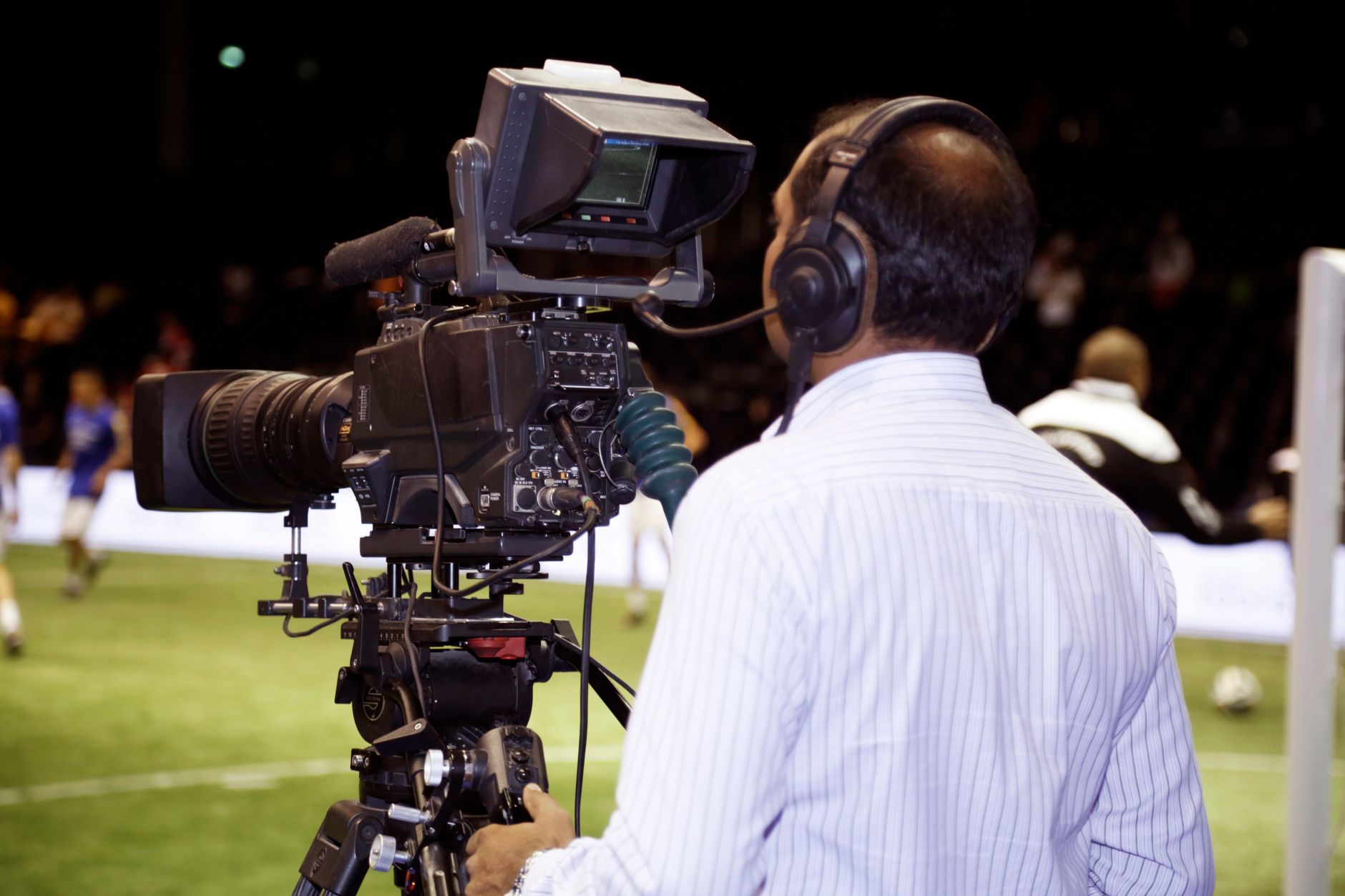
How the World Cup Became the Most-Watched Event on Earth — From Flickering Black-and-White Screens to 5 Billion Digital Viewers
July 8, 2026 · 11 min read
In 1954, a handful of European households watched the World Cup on grainy black-and-white television sets. By 2026, over five billion people across three host nations are consuming the tournament through broadcast, streaming, and social media. The World Cup didn't just grow with television — television grew because of the World Cup.
The First Signal: Switzerland 1954
The 1954 FIFA World Cup in Switzerland holds a distinction that has nothing to do with West Germany's stunning upset of Hungary in the "Miracle of Bern" final. It was the first World Cup to be televised. Swiss broadcasting authority SRG arranged coverage of select matches, reaching viewers in Switzerland, West Germany, Austria, and parts of France. The technology was primitive by today's standards — limited camera angles, poor resolution, and a signal that barely crossed national borders.
But the seed was planted. Audiences who experienced the tournament through a screen for the first time understood something that radio could never fully deliver: the visual drama of football. The tournament's knockout format, with its sudden-death tension and moments of individual brilliance, was made for the moving image.
Going Global: Sweden 1958 and Chile 1962
The 1958 World Cup in Sweden marked the first truly global television broadcast. The tournament reached audiences across Europe and parts of South America, all in black and white. This was the tournament where a 17-year-old Pelé announced himself to the world — and for the first time, the world could actually watch it happen. Television sets were still a luxury item in most countries, but public viewing in bars, community centers, and shop windows began to create a shared cultural experience.
By the time the 1962 World Cup arrived in Chile, satellite transmission was in its infancy. Limited satellite links allowed some matches to be broadcast across continents, though the technology was unreliable and the picture quality suffered. The real breakthrough was still four years away.
The Color Revolution: England 1966
The 1966 World Cup in England was a watershed moment for sports broadcasting. The BBC broadcast the tournament in color — the first World Cup to receive that treatment — while simultaneously providing black-and-white coverage for sets that couldn't handle color. An estimated 400 million viewers worldwide watched England beat West Germany 4-2 in the final at Wembley Stadium.
This tournament also gave the World Cup its first official mascot, World Cup Willie, and its first purpose-designed match ball — the Slazenger Challenge. These weren't just marketing decisions. They were signals that the World Cup had become a spectacle designed as much for the screen as for the stadium. The visual identity of the tournament — the colors, the branding, the pageantry — mattered because cameras were capturing it all.
The 1966 final drew an estimated 400 million television viewers — making it one of the largest shared human experiences in history up to that point.
Satellite Takes Over: Mexico 1970
If 1954 was the first signal, 1970 was the moment the signal went global. The World Cup in Mexico was the first to be broadcast live via satellite to audiences around the world. Fans in Tokyo, Lagos, and São Paulo could watch matches in real time — not through delayed highlights or next-day newspaper reports, but live.
The timing was perfect. Brazil's 1970 squad, widely regarded as the greatest team ever assembled, produced football of such beauty that it seemed designed for the medium. Pelé, Jairzinho, Tostão, and Gérson played a brand of attacking football that translated magnificently to television. An estimated 600 million people watched the final — a 50 percent increase from 1966. The satellite had turned the World Cup from a continental event into a truly global one.
This was also the year that Panini launched its first World Cup sticker album, creating a parallel economy of collecting and trading that would become inseparable from the tournament experience. The World Cup was no longer just a sporting event — it was a commercial ecosystem, and television was its engine.
The Commercial Boom: 1982–1994
The 1982 World Cup in Spain expanded the field from 16 to 24 teams, and with it came a massive expansion of broadcasting deals. For the first time, television rights became a primary revenue stream for FIFA. Networks around the world bid for the privilege of showing matches, and the revenue funded the tournament's growth in infrastructure, prize money, and global reach.
The 1990 tournament in Italy took commercialization further. Advertising revenue from World Cup broadcasts became a major income source for participating networks. The tournament's prime-time scheduling — carefully arranged to maximize viewership across time zones — turned every match into a premium advertising opportunity.
But it was the 1994 World Cup in the United States that proved football could conquer the world's most lucrative media market. The tournament drew 3.59 million spectators to stadiums — a record that would stand for 32 years. American television networks, initially skeptical of football's appeal, discovered that the World Cup could draw massive audiences. The final between Brazil and Italy, decided on penalties, was watched by an estimated 2.5 billion viewers across 188 countries.
The Digital Shift: 1998–2014
The expansion to 32 teams for the 1998 World Cup in France brought more nations into the tournament — and more national audiences to their television screens. Each new qualifying country represented millions of potential viewers with a personal stake in the outcome. The cumulative audience for the 1998 tournament was estimated at 33.4 billion across all matches.
The 2002 World Cup in South Korea and Japan presented a unique challenge: the first tournament in Asia meant awkward kickoff times for European and American audiences. But it also demonstrated the World Cup's ability to adapt. Fans adjusted their schedules, employers installed television sets in offices, and the tournament proved that its appeal transcended time zones.
By 2006 in Germany, the numbers were staggering. Cumulative viewership across all matches reached 26.29 billion. The final alone drew 715.1 million viewers — nearly one-ninth of the world's population. The 2006 World Cup draw, which decided the group-stage distribution, was watched by 300 million people. Even the ceremony of sorting teams into pots had become must-see television.
The 2010 World Cup in South Africa brought the tournament to Africa for the first time, and the 2014 edition in Brazil generated $4.8 billion in FIFA revenue. Television was no longer just a window into the World Cup — it was the financial foundation on which the entire tournament rested.
The Streaming Era: 2018–2022
The 2018 World Cup in Russia marked a turning point. FIFA's revenue hit $6.1 billion, driven largely by broadcasting rights. But the way people consumed the tournament was fragmenting. Digital streaming platforms began to compete with traditional broadcasters. Highlights appeared on social media within minutes. Second-screen viewing — watching the match on television while following commentary, stats, and reactions on a phone — became the default mode for younger audiences.
The 2022 World Cup in Qatar was unlike any before it. Held in November-December for the first time to avoid the extreme summer heat, it disrupted the traditional football calendar but delivered record engagement. The final between Argentina and France, widely considered one of the greatest matches ever played, drew massive global audiences across every platform.
Three Nations, Every Screen: 2026
The 2026 World Cup across the United States, Mexico, and Canada represents the most ambitious broadcasting operation in football history. The International Broadcast Center at the Kay Bailey Hutchison Convention Center in Dallas serves as the nerve center for a global operation that reaches every inhabited continent.
The tournament has already shattered the all-time attendance record. On June 25, 2026, during the Group E match between Ecuador and Germany at MetLife Stadium, cumulative attendance reached 3,605,357 — surpassing the 1994 record of 3,587,538 with 44 matches still to play. Venues have operated at an average capacity exceeding 90 percent.
But the bigger story is on the digital side. In January 2026, FIFA signed a deal making TikTok a "preferred platform" for World Cup video content, with broadcasters allowed to stream parts of matches on a dedicated TikTok hub. Two months later, a similar deal with YouTube allowed broadcasters to stream select matches in full on their channels, and to air the first 10 minutes of every match as what FIFA called "an appetizer encouraging young fans" to tune in.
These deals represent a fundamental shift in FIFA's broadcasting philosophy. For decades, the organization treated television rights as exclusive, jealously guarded assets. Now, it is deliberately fragmenting distribution to reach audiences — particularly younger ones — who consume sports differently. The traditional 90-minute live broadcast is no longer the only product. Highlights, clips, reactions, and short-form content are equally valuable in a world where attention spans are measured in seconds.
The Revenue Engine
Broadcasting rights remain the single largest revenue source for FIFA. The 2026 tournament carries a total prize distribution of $871 million — nearly double the 2022 pool — funded in large part by media deals. Fox Sports holds the English-language rights in the United States, Telemundo Deportes covers Spanish-language audiences, and Bell Media serves Canada. These contracts were signed back in 2015, when FIFA renewed the deals without accepting competing bids — a decision that compensated broadcasters for the disruption caused by the 2022 tournament's move to winter.
The financial ecosystem around World Cup broadcasting has created a self-reinforcing cycle. More viewers attract more advertising revenue. More revenue funds bigger tournaments with more matches. More matches generate more content for broadcasters to sell. The expansion to 48 teams and 104 matches in 2026 is not just a sporting decision — it is a broadcasting one.
What Changed and What Didn't
The technology has transformed beyond recognition. A 1954 viewer watched a single camera angle in black and white on a 12-inch screen. A 2026 viewer chooses between 4K ultra-high-definition broadcasts, multi-angle streaming, real-time statistics overlays, and social media commentary — all on a device that fits in a pocket.
But the core experience hasn't changed. A goal in the 90th minute still produces the same primal reaction whether it's watched on a communal television in a Buenos Aires bar in 1978 or on a smartphone in a Jakarta café in 2026. The World Cup's power as a broadcasting phenomenon comes not from the technology that delivers it, but from the sport itself — its capacity to produce moments of drama, beauty, and heartbreak that transcend language, culture, and geography.
From a few thousand Swiss television sets to billions of screens worldwide, the World Cup's broadcasting journey mirrors the story of globalization itself. Each technological leap — satellite, color, digital, mobile — didn't just expand the audience. It deepened the connection between the tournament and the people who watch it. The World Cup didn't become the most-watched event on earth because of television. It became the most-watched event on earth because it gave television something worth watching.
Key Takeaways
- 1954 was the starting line: The World Cup in Switzerland was the first to be televised, reaching a handful of European countries on primitive black-and-white sets.
- Satellite changed everything in 1970: Mexico 1970 was the first World Cup broadcast live via satellite globally, drawing an estimated 600 million viewers for the final — a 50 percent increase from 1966.
- The 2006 numbers remain iconic: Cumulative viewership of 26.29 billion across all matches, with 715.1 million watching the final — nearly one-ninth of the global population.
- Digital is the new battleground: FIFA's 2026 deals with TikTok and YouTube represent a deliberate shift from exclusive broadcasting to fragmented, platform-specific distribution aimed at younger audiences.
- 2026 shatters attendance records: Cumulative stadium attendance surpassed 3.6 million during the group stage alone, breaking the 32-year-old record set at the 1994 World Cup in the United States.
- Broadcasting funds the tournament: FIFA's revenue grew from $4.8 billion in 2014 to $6.1 billion in 2018, with broadcasting rights as the single largest income source — the 2026 prize pool of $871 million is nearly double the 2022 figure.