July 10, 2026 · 10 min read · sports-knowledge
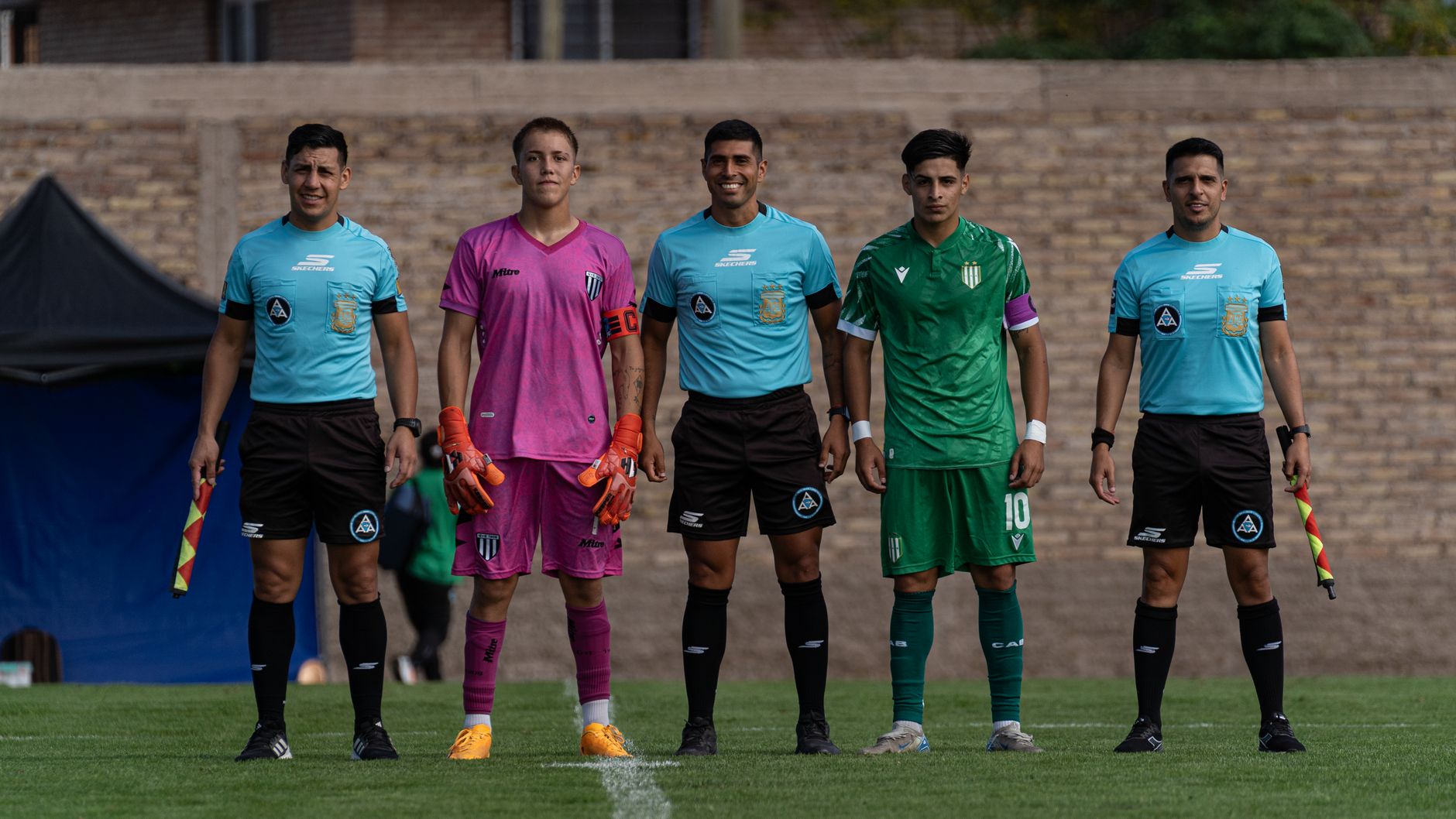
Referee Radio — How Wireless Headsets, Flag Signals, and the VAR Room Connect Football's Officiating Team
July 10, 2026 · 12 min read
When a referee points to the penalty spot in a packed stadium of 80,000 fans, the decision didn't come from one person alone. Behind every whistle blow and every card shown is an invisible web of communication — wireless headsets crackling in the referee's ear, flags snapping in precise patterns on the touchline, and a video room hundreds of miles away feeding real-time information to the pitch. Here's how it all works.
The Old-School Toolkit: Flags and Whistles
Long before wireless headsets entered football, the entire officiating language was physical. The referee controlled play with a whistle — first adopted in the 1870s, replacing the white handkerchief that early referees waved to signal decisions. Assistant referees, still called "linesmen" by many fans, used flags to communicate across the pitch.
The flag remains one of football's most elegant communication tools. A straight arm raised vertically signals a foul or infringement. A flag pointed at a 45-degree angle indicates offside. A flag waved overhead signals a substitution request from the fourth official. These signals are standardized worldwide by IFAB's Laws of the Game, meaning an assistant referee in São Paulo communicates identically to one in Sapporo.
The diagonal system of control (DSC) — the standard positioning framework used at every level of organized football — places the referee and two assistant referees in a triangular formation that maximizes visual coverage. Each assistant covers one half of the pitch from the touchline, while the referee moves diagonally from corner to corner. This spatial arrangement means that at any given moment, at least one official has a clear sightline to the action.
But flags have a fundamental limitation: they're one-directional. An assistant can signal to the referee, but the referee can't respond without stopping play or making eye contact. In a fast-moving match with 22 players, that gap in real-time dialogue created problems — missed signals, delayed reactions, and decisions made without the full picture.
The Headset Revolution: Wireless Communication Arrives
The introduction of wireless communication headsets transformed football officiating from a visual-only system to a real-time verbal network. At the highest levels of the game, the entire officiating crew — the referee, both assistant referees, the fourth official, and the VAR team — is equipped with wireless microphones and earpieces that allow instant voice communication.
The technology works on dedicated radio frequencies assigned by FIFA for each match. In a stadium packed with 80,000 fans, mobile phones, and broadcasting equipment, radio interference is a genuine concern. FIFA's technical team coordinates frequency allocation before every match to ensure the officials' communication channel remains clear and private — fans in the stadium cannot tune into referee conversations.
The practical impact is enormous. Instead of waiting for the assistant referee to catch the referee's eye after a borderline offside call, the assistant can simply speak into the microphone: "Offside, number nine, interfering with play." The referee hears it instantly through the earpiece and makes the call without breaking stride. When a fourth official needs to communicate a substitution or report an incident on the bench, a quick radio message replaces the old system of flag waves and shouted instructions.
The headset system also enables what officials call "pre-decision" communication. Before a corner kick, the referee might radio the assistant: "Watch the far post — number four is holding." During a penalty kick, the VAR might whisper: "Checking encroachment — you're clear." This constant low-level dialogue keeps the entire crew synchronized in ways that were impossible with flags alone.
What Officials Actually Say
FIFA-trained referees follow a standardized communication protocol. Messages are brief, specific, and action-oriented. A typical exchange during a controversial challenge might sound like this:
- Referee: "I've got a foul, number seven, reckless challenge. Yellow card."
- VAR: "Checking — possible red card. Stand by."
- VAR (after review): "Check complete. No red card — contact was with the shin guard, not the ankle. Confirm yellow."
- Referee: "Yellow confirmed. Play on."
The protocol avoids ambiguity. Officials don't say "I think it was a foul" — they state the decision and the reason. This precision is critical when a decision might be scrutinized by millions of viewers on replay.
The VAR Room: Football's Nerve Center
The video assistant referee system represents the most sophisticated communication link in football's officiating network. Introduced to the World Cup in 2018 — where it achieved a 99.3% success rate across 335 checked incidents in the group stage alone — VAR connects the on-field referee to a team of officials watching multiple camera feeds in real time.
At the World Cup 2026, the VAR setup consists of 42 cameras in each venue, including slow-motion and ultra-slow-motion cameras, plus dedicated cameras for semi-automated offside technology. All FIFA host broadcaster camera feeds are available to the VAR team, ensuring the best possible angle on every play.
The VAR team typically includes the VAR (a qualified referee), an assistant VAR (AVAR), a replay operator, and — at World Cup level — an offside specialist. They sit in a video operation room (VOR) that can be located inside the stadium or at a centralized facility. The English Premier League, for example, stations all its VAR teams at Stockley Park in London; the German Football Association uses Cologne-Deutz. FIFA places the VOR inside each World Cup stadium to minimize communication latency.
The Silent Check: Communication You Never See
Most VAR communication is invisible to fans. Every reviewable decision — goals, penalties, red cards, and cases of mistaken identity — triggers an automatic "silent check." The VAR reviews the footage and, if the on-field decision was correct, simply confirms: "Check complete — goal confirmed" or "Check complete — no penalty."
These silent checks happen dozens of times per match without any stoppage. The referee continues managing the game while the VAR works in the background, only interrupting when a clear and obvious error is identified. According to FIFA's data, the vast majority of checks result in confirmation of the original decision — the system is designed to be invisible when it works.
When the VAR does identify a potential error, three outcomes are possible: the decision is overturned immediately (for factual matters like offside), an on-field review (OFR) is recommended (for judgment calls), or the referee is advised to ignore the check if no error is found. The referee signals an OFR by making a rectangle shape with both hands — the universal "screen" gesture — and reviews the footage on a pitchside monitor.
The Full Crew: Six Officials, One Network
A modern World Cup match involves up to six officials connected through the communication system. Each has a distinct role, but the headset network ties them into a single decision-making unit.
- Referee: Final decision-maker on all matters. Controls the match through whistle, cards, and verbal commands. Receives input from all other officials through the headset.
- Assistant Referee 1 and 2: Patrol the touchlines, judge offside and ball-in-play decisions. Signal with flags for clear situations, use the headset for nuanced or fast-moving calls where the flag alone might be missed.
- Fourth Official: Manages substitutions, monitors the technical areas, and acts as a communication relay between the referee and the VAR. Positioned near the team benches, the fourth official's headset connection is often the busiest channel during substitution windows.
- VAR and AVAR: Located in the video operation room, they review all match-changing incidents using 42 camera feeds. They communicate directly with the referee through the headset, following strict protocols about when and how to intervene.
When Communication Breaks Down
The reliance on technology creates a vulnerability that football's lawmakers have had to address: what happens when the system fails? IFAB's Laws of the Game specify that if the communication system breaks down during a match, the officials revert to the traditional flag-and-whistle system. The fourth official becomes the primary relay point, physically running messages between the VAR room and the referee if needed.
This isn't theoretical. During a 2017 A-League Grand Final in Australia, the VAR software suffered a technical malfunction that prevented the assistant referee from viewing replays. The match continued with the on-field officials making decisions without video support — a reminder that the human communication system remains the backbone of football officiating, even in the technology age.
There have also been cases where external factors disrupted the system. In a Portuguese league match, a supporter's flag was positioned in front of the VAR camera, blocking the video feed. FIFA's protocol now requires camera positions to be cleared of any obstructions before kick-off, and backup cameras are positioned at alternate angles.
Language and the International Challenge
One of the less obvious communication challenges at the World Cup is language. A typical match might feature a referee from Brazil, assistant referees from Japan and Senegal, a fourth official from Mexico, and a VAR team based in a different country entirely. FIFA's solution: all official communication during matches is conducted in English.
Referees selected for World Cup duty must pass English proficiency tests as part of their fitness and technical assessments. The standardized protocol helps — officials use a limited vocabulary of specific terms ("checking," "confirm," "recommend OFR," "check complete") that minimizes the chance of misunderstanding. But the language requirement adds another layer of preparation that fans rarely consider when watching a match.
FIFA also assigns officials from the same linguistic region where possible, and provides interpreters in the VOR when needed. But at the knockout stage of a World Cup, when the best referees from every confederation are in action, cross-language communication is the norm rather than the exception.
The Evolution: From Handkerchiefs to Semi-Automated Offside
The trajectory of referee communication in football is a story of gradual technological adoption. The progression from handkerchiefs (pre-1870s) to whistles (1870s) to flags (standardized in the 20th century) to wireless headsets (2000s) to VAR (2018) to semi-automated offside technology (2022) represents a continuous effort to close the information gap between what officials see and what actually happens on the pitch.
Semi-automated offside technology (SAOT), used at the 2022 World Cup and now standard at the 2026 tournament, adds yet another communication layer. Twelve dedicated cameras track 29 body points on each player, generating a 3D offside model within seconds. When the system detects a potential offside, it sends an automated alert to the VAR, who then communicates to the referee. The entire process — from the moment the ball is played to the VAR's recommendation — takes an average of 25 seconds, compared to the 70+ seconds that manual offside checks required.
The result is a communication chain that spans from camera sensors to algorithms to human officials to the referee's final gesture — all happening in less time than it takes to take a corner kick.
Key Takeaways
- Flags and whistles are still foundational: The diagonal system of control and standardized flag signals remain the base layer of referee communication, even in the VAR era. Technology augments these tools but hasn't replaced them.
- Wireless headsets changed the game: Real-time voice communication between all six officials — referee, assistants, fourth official, VAR, and AVAR — enables split-second coordination that was impossible with visual signals alone.
- The VAR room is a communication hub: With 42 cameras and a team of specialized officials, the video operation room processes dozens of silent checks per match, only surfacing when a clear error is detected.
- Language and protocol matter: At the World Cup, English is the official communication language, and standardized terminology minimizes misunderstanding between officials from different countries.
- The system has built-in redundancy: If technology fails, officials revert to the traditional flag-and-whistle system — the human communication backbone that has served football for over 150 years.