July 13, 2026 · 13 min read · sports-knowledge
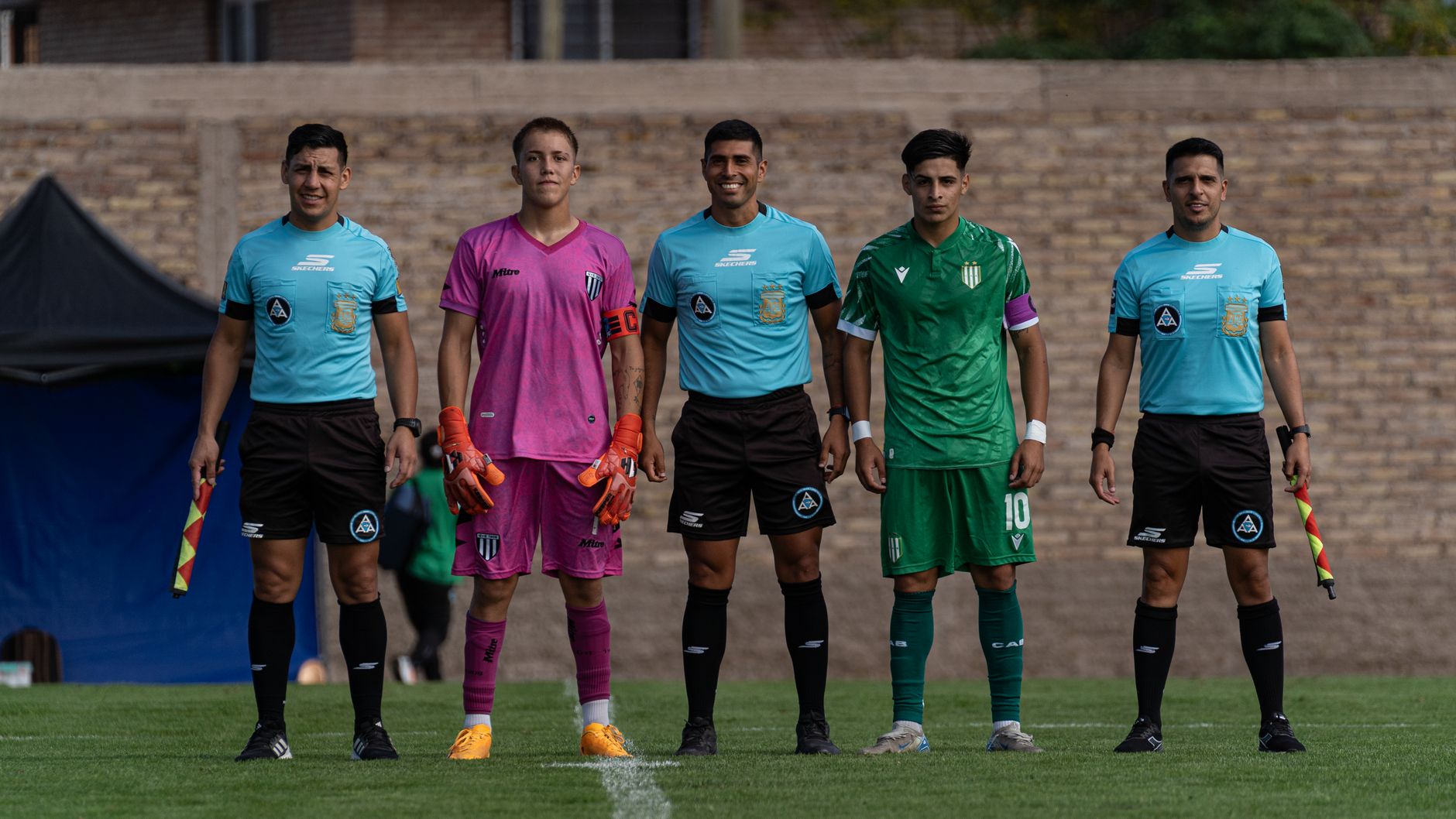
The Assistant Referee — What Linesmen Actually Do Beyond Raising the Flag
July 13, 2026 · 10 min read
When a linesman's flag shoots up for offside, millions of fans groan or cheer. But the assistant referee's job extends far beyond that single moment — from tracking the ball across the touchline to managing wall distances, advising on fouls the referee cannot see, and staying locked in step with the last defender for 90 minutes. Here is everything the person on the sideline actually does.
From Linesman to Assistant Referee — Why the Name Changed
For most of football's history, the officials patrolling the touchlines were called "linesmen." The term dated back to the sport's earliest codification in the 1860s, when their primary job was simply to judge whether the ball had crossed the boundary line. Football was simpler then, and so was the officiating.
In 1996, the International Football Association Board (IFAB) officially renamed the position "assistant referee." The change served two purposes. First, it better reflected the expanding scope of the role — by the mid-1990s, assistant referees were responsible for far more than just throw-in decisions. Second, it made the title gender-neutral, acknowledging the growing number of women officiating at every level of the game.
The old term "linesman" persists in casual conversation, and you will still hear commentators use it. But in the Laws of the Game and in official FIFA communications, the position has been "assistant referee" for three decades. Understanding what that title actually entails reveals just how demanding the job has become.
The Five Core Duties
Law 6 of the Laws of the Game — titled "The Other Match Officials" — lays out the assistant referee's responsibilities. While the referee retains final authority on every decision, the assistant referee is expected to advise on five specific categories of judgment.
1. When the Ball Leaves the Field of Play
The original and most basic duty. The assistant referee tracks whether the whole of the ball has crossed the touchline or goal line, and signals which team is entitled to the restart — a throw-in, goal kick, or corner kick. This sounds straightforward until you consider that a ball traveling at 80 km/h can cross a line by millimeters in a fraction of a second, while the assistant must simultaneously watch the ball, the line, and the players around it.
At the professional level, goal-line technology now handles the most contentious boundary decisions — whether the ball fully crossed the goal line. But the technology does not cover touchline decisions or goal kicks versus corners. Those remain entirely in the assistant referee's hands.
2. Offside Judgments
This is the decision that defines the position in the public imagination. The assistant referee must determine whether an attacking player is in an offside position at the moment the ball is played by a teammate. The Laws require the official to track three things simultaneously: the position of the second-last defender (usually the last outfield defender), the position of the ball, and the position of the attacking player receiving the ball.
The difficulty is staggering. In a fast-moving counter-attack, the defensive line can shift by several meters in a single second. The assistant must stay perfectly level with the last defender while also watching the passer's foot to identify the exact moment of the pass. FIFA's fitness tests require assistant referees to maintain positioning accuracy within one meter of the offside line across 90 minutes of play.
Since the introduction of VAR and semi-automated offside technology at major tournaments, the assistant's flag for close offside calls has become more cautious. At the 2022 World Cup in Qatar, FIFA instructed assistants to keep the flag down on tight decisions and let play continue — if a goal resulted, VAR could review the offside retrospectively. This protocol continues at the 2026 World Cup. The assistant still makes the initial judgment, but the technology provides a safety net for marginal calls measured in centimeters.
3. Fouls and Infringements Outside the Referee's View
The referee cannot see everything. With 22 players spread across 7,000 square meters of pitch, blind spots are inevitable. The assistant referee is expected to alert the referee to fouls, handballs, and other infringements that occur in the assistant's quadrant of the field but outside the referee's line of sight.
This is where the advisory nature of the assistant's role becomes most apparent. The assistant can flag for a foul, but the referee is free to overrule the signal. In practice, referees rely heavily on their assistants for incidents near the touchline — shirt-pulling in the penalty area during a corner kick, off-the-ball confrontations, and simulation that the referee's angle does not expose.
The key principle is that the assistant's call is a recommendation, not a verdict. The referee remains the sole arbiter of the Laws. This hierarchy exists to prevent conflicting decisions from multiple officials, but it also means that when an assistant's flag is ignored, the final responsibility rests with the referee.
4. Substitution Management
When no fourth official is present — typically at lower levels of the game — the assistant referee nearest the technical areas manages the substitution process. This includes verifying that the departing player has left the field before the replacement enters, checking that the substitute's equipment meets the Laws, and signaling to the referee that the substitution is complete.
At professional matches with a fourth official, this duty transfers to the fourth official. But even then, the assistant nearest the halfway line will often help manage the departing player's exit, especially when tempers flare or a substituted player takes an unnecessarily long route off the pitch.
5. Penalty Kick Assistance
During penalty kicks, the assistant referee positioned at the goal line watches for two things: whether the goalkeeper moves off the line before the kick is taken (which, under current rules, requires at least one foot on the line), and whether the ball fully crosses the goal line after the kick. This positioning puts the assistant in the direct firing line of a shot traveling at up to 130 km/h — one of the most physically exposed positions in professional sport.
Since the 2019 IFAB amendment, goalkeepers must have at least one foot on or level with the line at the moment of the kick. VAR reviews have made this judgment more rigorous — at the 2022 World Cup, several penalties were ordered to be retaken after VAR detected the goalkeeper had both feet in front of the line. The assistant referee's initial signal is the first layer of enforcement; VAR provides the second.
The Diagonal System of Control
Assistant referees do not simply stand on the touchline and watch. They operate within the "diagonal system of control" (DSC), the positioning framework used in virtually all professional football. Under the DSC, the referee runs diagonally across the pitch — typically from one corner to the opposite corner — while each assistant referee covers one touchline and the half of the field nearest to them.
The system ensures that at any moment during the match, one assistant is level with the defensive line on each side of the pitch. When play shifts from one side to the other, the assistants adjust their positions along the touchline, maintaining the best possible angle for offside judgments and foul detection.
The more experienced assistant typically occupies the side of the pitch containing the team technical areas. This placement allows them to oversee substitution procedures and communicate with the fourth official more easily. At the 2026 World Cup, FIFA assigns assistant referee positions based on a combination of experience, fitness assessments, and language compatibility with the referee.
The Flag — A Silent Language
The assistant referee's brightly colored flag — usually red, yellow, or a combination — is far more than a visual prop. It is a coded communication system that conveys specific information to the referee, players, and spectators through a vocabulary of standardized signals.
- Flag raised vertically: Stoppage — the assistant has identified an infringement (offside, foul, or other violation) and the referee should halt play.
- Flag pointed in a direction: Indicates which team gets the restart and the direction of play (throw-in, goal kick, or corner).
- Flag raised at a 45-degree angle: Signals an offside position. The angle of the flag indicates the zone of the field where the offside occurred — near side, middle, or far side.
- Flag waved while raised: Used to attract the referee's attention for a more urgent decision — typically a violent conduct incident or a clear foul that the referee has missed.
- Flag held low and still: Play continues — no infringement detected. The assistant maintains this neutral position during normal play.
At higher levels of play, the flag may be equipped with a button that sends an audible signal to the referee's earpiece. This technology, which became standard in the 2010s, allows the assistant to get the referee's attention instantly in loud stadiums without relying solely on visual signals — a significant advantage in venues like the 80,000-seat stadiums hosting the 2026 World Cup.
The Additional Assistant Referee — A Third Pair of Eyes
At certain competitions — most notably UEFA Champions League, Europa League, and European Championship matches — two additional assistant referees (AARs) are positioned behind the goal lines, one at each end of the pitch. Their job is to observe incidents in and around the penalty area that the main referee and touchline assistants cannot see from their standard positions.
The AAR system was trialed starting in the 2009–10 UEFA Europa League group stage and expanded to the Champions League and Euro 2012. After a two-year experiment, IFAB officially approved the use of additional assistant referees in July 2012. Their reception has been mixed — critics argue they add marginal value compared to their cost, while supporters point to their role in detecting fouls in crowded penalty areas and providing an extra perspective on "ghost goal" incidents where it is unclear whether the ball crossed the line.
At the 2026 World Cup, FIFA does not use additional assistant referees, relying instead on VAR and semi-automated offside technology to cover the areas that AARs would monitor. The trade-off between human positioning and technological coverage continues to evolve.
How VAR Changed the Assistant's Job
The introduction of the Video Assistant Referee has not replaced the assistant referee — it has reshaped the role. Before VAR, the assistant's flag was the final word on offside. A raised flag stopped play immediately, and there was no recourse. Now, in matches with VAR, assistants are instructed to keep the flag down on close offside decisions and let the attack play out.
The logic is simple: if the assistant raises the flag for a marginal offside and play stops, a potentially legitimate goal-scoring opportunity is killed. If the flag stays down and the attack results in a goal, VAR can review the offside and disallow it if necessary. The cost of a wrong flag-down call is lower than the cost of a wrong flag-up call, because VAR provides a second chance only when play continues.
This protocol has shifted the assistant's mental calculus. Instead of erring on the side of flagging — which was the traditional approach — assistants now err on the side of keeping play going. The result is that more close offside calls are reviewed by VAR, leading to more accurate outcomes but also longer stoppages and the occasional disallowed goal that feels anti-climactic to fans in the stadium.
Semi-automated offside technology, used at the 2022 World Cup and again in 2026, takes this further. A system of 12 dedicated cameras tracks 29 body points on each player, creating a real-time 3D model of every offside situation. When the technology detects an offside, it alerts the VAR room within seconds. The assistant referee's flag remains the first line of judgment, but the technology provides a precision that human eyes alone cannot match — particularly in situations where the offside margin is measured in centimeters.
Physical Demands and Fitness Standards
Assistant referees are not standing still. FIFA's fitness requirements for assistant referees at major tournaments include repeated sprint tests, interval endurance tests, and a specific offside positioning assessment. During a 90-minute match, an assistant referee typically covers 6–8 kilometers, with a significant portion of that at high intensity — sprinting to keep pace with the defensive line during counter-attacks and transitions.
The positioning demands are unique. While referees can adjust their running patterns to manage fatigue, assistant referees must stay precisely level with the last defender at the moment the ball is played. This requires not just speed and endurance but the cognitive ability to process multiple visual inputs simultaneously — the ball, the defensive line, the attacking player, and the touchline — while maintaining physical balance at sprint speed.
At the 2026 World Cup, FIFA's assistant referee fitness battery includes the Repeated Sprint Ability (RSA) test — 6 x 40-meter sprints with 60-second recovery — and the Interval Recovery Test (IRT), which simulates the stop-start nature of match running. Assistants who fail these assessments are not selected for the tournament, regardless of their experience or reputation.
The Most Thankless Job in Football?
Assistant referees occupy a peculiar position in football's ecosystem. Their correct decisions go unnoticed — no one celebrates a properly awarded throw-in. Their errors, however, are amplified by instant replay, social media outrage, and the visceral reaction of seeing a goal chalked off for offside. A referee can earn praise for a well-managed match; an assistant referee can only avoid criticism.
The introduction of semi-automated offside technology has, paradoxically, made the assistant's position more visible. When the technology confirms a tight offside call that the assistant flagged correctly, commentators praise the system. When it overturns a flag, the assistant is implicitly blamed for a call that no human could have made with certainty at full speed.
Yet the role remains essential. Technology covers offside and goal-line decisions, but the assistant referee's judgment on throw-ins, corners, fouls near the touchline, and off-the-ball incidents is still entirely human. In a sport increasingly mediated by screens and algorithms, the person on the touchline with the flag is one of the last links to football's analog roots.
Key Takeaways
- The assistant referee has five core duties under Law 6: ball out of play, offside, fouls outside the referee's view, substitution management, and penalty kick assistance.
- All assistant referee decisions are advisory — the referee retains final authority and can overrule any signal from the touchline.
- The diagonal system of control positions each assistant on opposite touchlines, covering their own half and maintaining alignment with the last defender.
- VAR has changed the assistant's approach to offside: close calls now favor keeping the flag down and letting play continue, with technology providing a retrospective safety net.
- Semi-automated offside technology tracks 29 body points per player, delivering centimeter-level precision that no human eye can match — but the assistant's judgment on fouls, throw-ins, and positioning remains irreplaceable.
- Assistant referees cover 6–8 kilometers per match and must pass rigorous FIFA fitness tests, including repeated sprints and interval endurance assessments.
- The position was renamed from "linesman" to "assistant referee" in 1996 to reflect the expanded scope of duties and to use gender-neutral language.