17 juillet 2026 · 9 blog.minRead · sports-knowledge
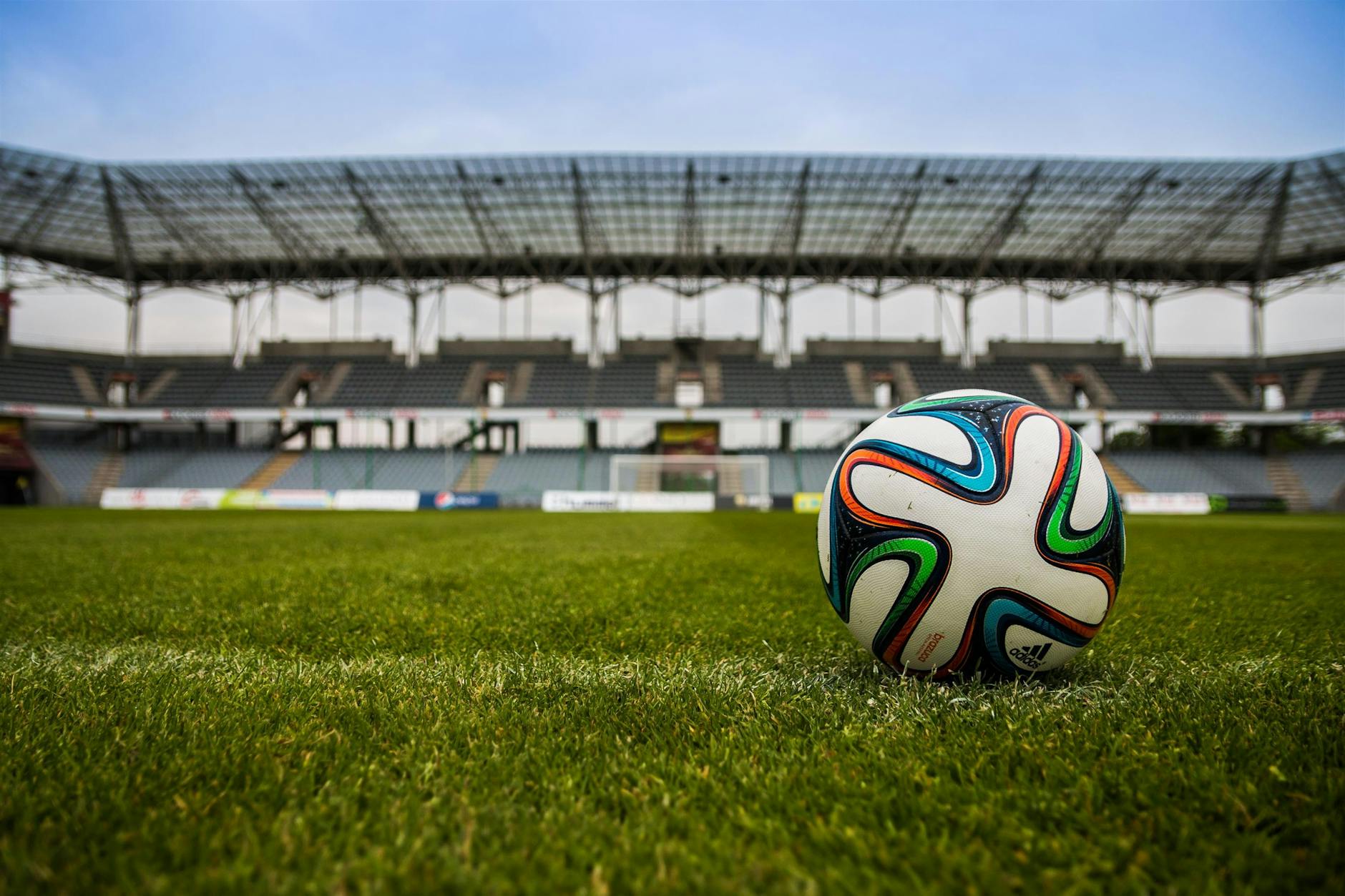
The Match Ball — How FIFA Tests and Certifies the World Cup Match Ball
July 17, 2026 · 9 min read
Before the Trionda ever touched a World Cup pitch, it survived drop tests, water absorption trials, and shape retention checks that would destroy a casual kickabout ball. FIFA\u2019s certification process is one of the most rigorous in sport \u2014 and it shapes everything from how the ball flies to how VAR tracks it in real time.
Law 2: The Rules Behind Every Ball
Every football used in organized competition must comply with Law 2 of the Laws of the Game, maintained by the International Football Association Board (IFAB). The specifications are exact: a circumference of 68 to 70 centimeters (27 to 28 inches), a mass of 410 to 450 grams (14 to 16 ounces), and a pressure of 0.6 to 1.1 kilograms-force per square centimeter (59 to 108 kPa, or 8.5 to 15.6 psi) at the start of the match.
These numbers have remained essentially unchanged since 1872, when IFAB first standardized the ball\u2019s dimensions. But Law 2 only sets the floor. For World Cup matches, FIFA imposes additional, more stringent standards through its Quality Programme \u2014 a battery of laboratory tests that go far beyond what the casual fan might imagine.
From Animal Bladder to Polyurethane Shell
The modern match ball bears almost no resemblance to its ancestors. In 1863, the first Football Association specifications called for a ball made of inflated animal bladder wrapped in leather. These early balls absorbed water in rain, becoming dangerously heavy \u2014 a problem that persisted for over a century and has since been linked to dementia in former players who headed the ball regularly.
Charles Goodyear\u2019s vulcanized rubber, introduced in 1838, was the first major breakthrough. It enabled inflatable bladders that could hold consistent pressure and bounce reliably in wet and cold conditions. The leather lace that once stitched panels together was eliminated in 1931 when Argentine inventors Romano Polo, Antonio Tossolini, and Juan Valbonesi patented the Superball \u2014 a laceless design adopted by the Argentine Football Association the following year.
Today\u2019s match balls are engineering products. Most consist of twelve regular pentagonal and twenty regular hexagonal panels arranged in a truncated icosahedron geometry \u2014 the same shape as a classic 32-panel Adidas Telstar. But the 2026 World Cup\u2019s Trionda has pushed the envelope further, using just four thermally bonded polyurethane panels \u2014 the fewest ever for a World Cup ball. The inner bladder is made of latex or butyl rubber, and the outer panels are textured with debossed macro and micro patterns designed to improve flight stability, swerve, and grip in wet conditions.
How the Ball Is Made: Sialkot\u2019s Factories
An estimated 70 percent of all footballs worldwide are manufactured in Sialkot, Pakistan \u2014 a city that has been the sport\u2019s production capital for decades. The 2026 World Cup\u2019s Trionda is made by Forward Sports, the same Pakistani company that produced the Al Rihla for the 2022 tournament in Qatar. Forward Sports operates under Adidas\u2019 direct supervision, with each ball undergoing multiple quality checkpoints before leaving the factory floor.
The manufacturing process starts with the polyurethane panels being cut from large sheets using precision dies. Each panel is textured with its surface pattern, then assembled around a pre-formed bladder. For thermo-bonded balls like the Trionda, the panels are joined using heat-activated adhesive rather than stitching \u2014 a process that creates a perfectly smooth surface with no seams to disrupt airflow. The ball is then inflated, inspected, and subjected to a series of tests that mirror FIFA\u2019s certification protocol.
FIFA\u2019s Testing Battery: What Every Ball Must Survive
FIFA\u2019s Quality Programme subjects match balls to a standardized set of laboratory tests. Each test measures a specific performance characteristic, and a ball must pass every one to receive FIFA certification. The tests are conducted at independent laboratories and include:
- Circumference: The ball must measure between 68.0 and 70.0 cm. Measured at multiple points using a steel tape to ensure uniformity. A ball even slightly outside this range is rejected.
- Roundness: The maximum deviation between the longest and shortest diameters must not exceed 1.5 percent. This ensures the ball travels in a predictable trajectory rather than wobbling unpredictably.
- Rebound: Dropped from a height of 2 meters onto a steel plate, the ball must bounce between 120 and 165 cm. This tests the bladder\u2019s pressure retention and the shell\u2019s energy return characteristics.
- Weight: The ball must fall between 410 and 450 grams. Each ball is weighed on a precision scale; balls outside this narrow window are discarded.
- Water absorption: The ball is submerged in water, agitated, and reweighed. It must not absorb more than 10 percent of its original weight. This is critical for matches played in rain \u2014 a waterlogged ball becomes heavier and harder to control, as generations of pre-synthetic-era players discovered.
- Shape and pressure retention: The ball is pressurized and left for 72 hours. After this period, it must retain at least 90 percent of its original pressure and show no measurable deformation. This ensures the ball performs consistently throughout a 90-minute match and beyond.
- Loss of pressure: Measured separately from shape retention, the absolute pressure loss must not exceed 20 percent over 72 hours. This is a tighter standard than the shape retention test and catches balls with micro-leaks in the valve or bladder.
Balls that pass all tests receive one of two FIFA marks: the FIFA Quality mark (for professional use) or the FIFA Quality Pro mark (for the highest level of competition, including World Cup matches). Only Quality Pro balls are used in FIFA tournament matches. The distinction matters \u2014 a Quality ball may be used in lower-tier competitions, but the World Cup demands the tightest tolerances.
The Knuckleball Problem: When Physics Surprises Everyone
FIFA\u2019s tests measure objective physical properties, but the real-world behavior of a match ball can still surprise even the most experienced players. The most notorious example is the 2010 World Cup\u2019s Adidas Jabulani, which became the subject of global controversy for its unpredictable \u2014 some said supernatural \u2014 flight patterns.
Italian striker Giampaolo Pazzini called the Jabulani \u201ca disaster.\u201d Claudio Bravo, Luis Fabiano, Lionel Messi, and Denmark\u2019s coach Morten Olsen all described it as impossible to predict. The outcry was severe enough that NASA\u2019s Fluid Mechanics Laboratory at Ames Research Center conducted independent tests. Aerospace engineer Rabi Mehta concluded that players were seeing a \u201cknuckle-ball effect\u201d \u2014 when a smooth-seamed ball is struck without spin, the air flow around the seams becomes asymmetric, creating sudden lateral forces that can push the ball in unexpected directions.
The Jabulani passed every FIFA laboratory test. It met all dimensional, weight, rebound, and water absorption standards. But its eight-panel thermally bonded construction produced a surface with fewer seams than previous designs, which reduced the aerodynamic \u201cgrip\u201d that players relied on to predict ball behavior. The lesson was clear: passing the lab tests does not guarantee a ball will behave predictably in match conditions.
Connected Ball Technology: The Trionda\u2019s Embedded Chip
The 2026 World Cup\u2019s Trionda represents the next frontier in match ball technology: embedded electronics. Inside one of the ball\u2019s four panels sits a side-mounted inertial measurement unit (IMU) chip, developed in partnership with Kinexon, a Munich-based sensor technology company. Unlike the 2022 Al Rihla\u2019s chip, which was suspended inside the bladder, the Trionda\u2019s chip is fixed to the panel wall \u2014 a design change that improves data accuracy.
The chip communicates with receivers positioned around the stadium, transmitting ball movement data to the video assistant referee (VAR) system within seconds. This enables semi-automated offside technology (SAOT) to make faster, more accurate decisions by precisely tracking the ball\u2019s position at the moment of a pass. The chip also records data on ball speed, spin rate, and trajectory \u2014 information that can be used for post-match analysis.
The connected ball concept first appeared at the 2018 World Cup in Russia, where the Adidas Telstar 18 contained an NFC chip. That chip did not provide any performance data \u2014 it was a consumer feature that let fans connect the ball to their smartphones for a digital \u201cuser experience.\u201d The 2022 Al Rihla\u2019s chip was the first to provide real-time data to match officials. The Trionda\u2019s side-mounted IMU improves on this by eliminating the damping effect of the bladder\u2019s air pressure on the suspended chip.
Why It Matters for Your Predictions
Understanding the match ball\u2019s characteristics is not just trivia \u2014 it has direct implications for prediction models. Ball behavior affects goal-scoring rates, set-piece effectiveness, and goalkeeper performance. The shift from stitched to thermo-bonded panels has reduced seam-induced drag, making modern balls fly faster and more predictably than their predecessors. This is one factor behind the gradual increase in long-range goals over the past two decades.
For prediction purposes, the Trionda\u2019s connected ball technology also changes the accuracy of VAR decisions. Semi-automated offside calls are now based on precise ball-tracking data rather than manual line-drawing, which reduces the variance in offside decisions. This matters for models that incorporate referee behavior and decision patterns as variables.
Weather conditions interact with ball specifications in measurable ways. The Trionda\u2019s textured surface is designed to maintain grip in wet conditions, but heavy rain still increases water absorption and changes the ball\u2019s effective mass. Models that account for weather \u2014 temperature, humidity, and altitude \u2014 should also consider the ball\u2019s water absorption rating as a variable, especially for matches in venues with unpredictable weather patterns.
Key Takeaways
- FIFA\u2019s Quality Programme subjects match balls to seven standardized tests covering circumference, roundness, rebound, weight, water absorption, shape retention, and pressure retention. Only \u201cQuality Pro\u201d balls are used at the World Cup.
- The 2026 Trionda is manufactured by Forward Sports in Sialkot, Pakistan, using four thermally bonded polyurethane panels \u2014 the fewest ever for a World Cup ball. Its side-mounted IMU chip provides real-time data to the VAR system.
- The 2010 Jabulani controversy proved that passing laboratory tests does not guarantee predictable on-field behavior. Aerodynamic properties depend on panel count, surface texture, and seam pattern in ways that standardized tests may not capture.
- Ball technology affects prediction models through goal-scoring rates, set-piece effectiveness, VAR decision accuracy, and weather interactions. Understanding the ball\u2019s physical characteristics adds a layer of precision to match predictions.