18 июля 2026 г. · 11 blog.minRead · sports-knowledge
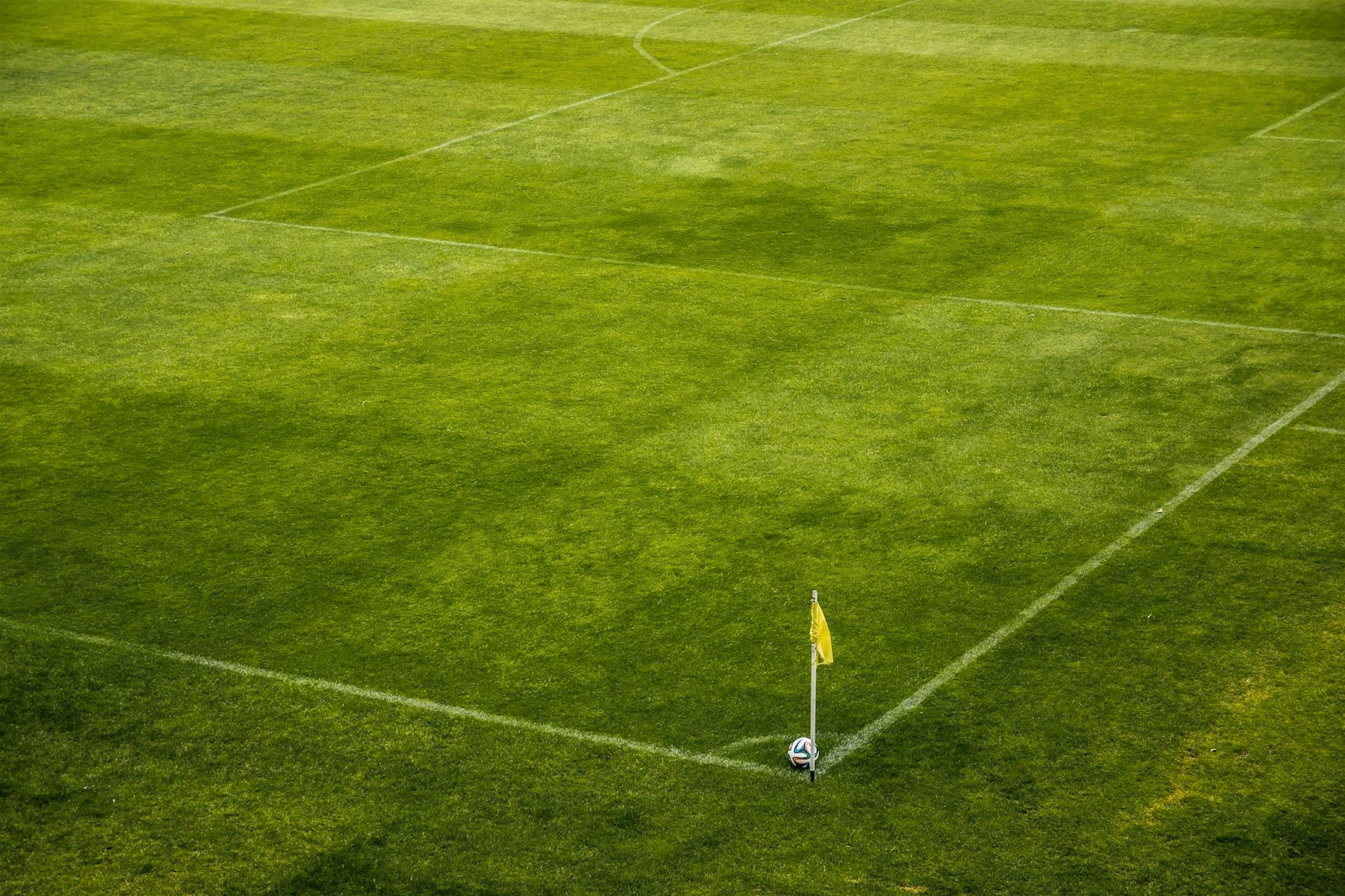
The Hybrid Pitch — How World Cup 2026 Stadiums Engineer Grass That Survives 82,000 Feet
July 18, 2026 · 9 min read
When 82,000 fans pack MetLife Stadium for the World Cup 2026 Final on July 19, the grass beneath their feet will be one of the tournament’s quietest triumphs. Eight of the sixteen host venues started with artificial turf — and every one of them had to be ripped out and replaced with living, breathing hybrid grass engineered to survive the most punishing month in football.
The Problem: Artificial Turf at the World Cup
FIFA’s Laws of the Game permit both natural and artificial surfaces, but every World Cup since 1930 has been played on natural grass. The reason is simple: professional footballers overwhelmingly prefer it. Natural turf provides better cushioning for joints, more predictable ball behaviour, and lower injury risk for tackles and slides. Artificial surfaces — even modern rubber-crumb infill systems — generate more friction, higher surface temperatures, and different ball bounce characteristics that players and coaches distrust at the elite level.
The 2026 tournament posed an unprecedented challenge. Of the sixteen selected venues, eight — including MetLife Stadium (New Jersey), AT&T Stadium (Dallas), NRG Stadium (Houston), Mercedes-Benz Stadium (Atlanta), Gillette Stadium (New England), Lumen Field (Seattle), SoFi Stadium (Los Angeles), and BC Place (Vancouver) — had permanent artificial turf surfaces designed for American football. These stadiums host NFL teams year-round, and their turf systems are engineered for gridiron, not the 90-minute continuous running demands of association football.
FIFA’s solution was not simply rolling out sod on top of artificial turf. The entire surface — from the synthetic carpet to the infill to the shock pad beneath — had to be removed and replaced with a living grass system capable of withstanding matches every three to four days across a 39-day tournament.
Hybrid Grass: The Technology That Makes It Work
The dominant technology behind modern football pitch engineering is hybrid grass — a system that combines natural turf with synthetic reinforcement fibres to create a surface that plays like natural grass but resists the wear patterns that destroy pure-grass pitches under heavy use.
The leading system is GrassMaster, developed by the Dutch company Desso Sports (now Tarkett Sports) in 1993. The process works like this: computer-controlled machines inject approximately 20 million polypropylene fibres vertically into the soil across the entire playing surface. Each fibre is 20 centimetres long, with 18 centimetres buried below the surface and 2 centimetres protruding above it. The fibres are spaced in a precise 2 cm × 2 cm grid, creating a synthetic skeleton throughout the root zone.
Natural grass seeds are then sown (or sods are laid), and as the roots grow, they entwine with the polypropylene fibres. The result is a root system that is dramatically stronger and more extensive than natural grass alone — the roots grow deeper into the fibre-reinforced soil and spread wider, anchoring the turf far more effectively. Above the surface, the exposed fibre tips blend with the living grass blades, creating a stable, even playing surface that can recover from damage faster than pure natural turf.
The system is used at over 700 professional venues worldwide, including Wembley Stadium, the Santiago Bernabéu, Anfield, and the Stade de France. For the 2026 World Cup, FIFA specified hybrid reinforcement for all sixteen venues, whether or not they originally had artificial turf.
Grass Species: Climate-Driven Choices
One of the most consequential decisions in World Cup pitch engineering is which grass species to plant. The 2026 tournament spans three countries and sixteen cities with radically different climates — from the humid heat of Miami and Houston to the cool maritime conditions of Vancouver and the dry warmth of Los Angeles. FIFA, working with a research team from the University of Tennessee and Michigan State University, developed a climate-based selection protocol.
For venues in cooler climates — including New York, New England, Philadelphia, Seattle, Toronto, and Vancouver — the specification was a blend of 84% Kentucky bluegrass (Poa pratensis) and 16% perennial ryegrass (Lolium perenne). Kentucky bluegrass is a cool-season grass that produces dense, resilient turf with strong rhizome networks (underground stems that spread horizontally and knit the turf together). Perennial ryegrass germinates quickly and provides rapid wear recovery, filling in damaged patches before the next match.
For warmer venues — Dallas, Houston, Atlanta, Miami, Los Angeles, Kansas City, and the three Mexican cities (Mexico City, Guadalajara, Monterrey) — the specification was Bermuda grass (Cynodon dactylon), a warm-season grass that thrives in heat, tolerates drought, and recovers aggressively from wear. Bermuda grass is the standard turfgrass for professional sports in the southern United States and has been used at every previous World Cup held in warm climates.
Indoor Stadiums: The Biggest Challenge
Four of the sixteen venues — Mercedes-Benz Stadium (Atlanta), AT&T Stadium (Dallas), NRG Stadium (Houston), and BC Place (Vancouver) — are indoor stadiums with retractable roofs. A fifth, SoFi Stadium (Los Angeles), has a translucent fixed roof. These venues present the most extreme engineering challenges because grass needs sunlight to photosynthesise, grow, and maintain its health. An indoor stadium, even with a retractable roof that opens on match days, may receive only a few hours of direct sunlight per day — far less than the 6–8 hours that healthy turfgrass requires.
The solution is a combination of grow lights and agronomic management. Mobile LED grow light rigs — large arrays of high-intensity red and blue LEDs mounted on wheeled frames — are driven across the pitch on non-match days, delivering photosynthetically active radiation (PAR) to the grass. These rigs can simulate 12–16 hours of sunlight in a concentrated period, driving photosynthesis even in a sealed stadium. The LED technology is energy-efficient and produces minimal heat, avoiding the surface temperature spikes that older metal-halide grow lights caused.
Indoor venues also require meticulous climate management. Grass respires (breathes) at night, consuming oxygen and releasing CO₂. In a sealed stadium, CO₂ levels can build up and inhibit growth if ventilation is inadequate. Temperature and humidity must be controlled to prevent fungal diseases like dollar spot and brown patch, which thrive in warm, humid, low-airflow conditions. Modern indoor stadiums address this with HVAC systems that maintain air circulation across the pitch surface, keeping the grass canopy dry and the microclimate within optimal ranges.
Undersoil Systems: Heating, Drainage, and Aeration
Beneath the visible grass surface lies a multi-layered infrastructure system that most fans never think about. The root zone — the top 30–40 centimetres of soil — is engineered, not natural. It typically consists of a carefully graded sand profile (sand drains quickly and resists compaction) with integrated drainage pipes laid in a herringbone pattern across the pitch. These pipes connect to a perimeter drainage system that channels water away from the playing surface, preventing waterlogging even during heavy rain.
Beneath the drainage layer sits the undersoil heating system — a network of hot-water pipes or electric heating cables embedded in a sand blanket. Undersoil heating maintains root-zone temperatures above 10°C (50°F) during cold weather, keeping the grass growing actively rather than entering dormancy. While most 2026 venues don’t face extreme cold during the June–July tournament window, the northern venues (Toronto, Vancouver, New England) could experience overnight temperatures that slow grass growth. The heating system ensures the turf remains in peak condition regardless of overnight lows.
Aeration is another critical maintenance practice. Over the course of a tournament, the root zone becomes compacted from the weight of players, groundskeeping equipment, and (in some venues) concert staging. Compacted soil restricts root growth and water infiltration. Groundskeepers use hollow-tine aerators — machines that punch small cylindrical holes into the soil and extract the cores — to relieve compaction and allow air, water, and nutrients to penetrate the root zone. This is typically done between match days, with the extracted cores swept up and the holes topdressed with sand.
FIFA’s Pitch Testing Protocol
FIFA does not leave pitch quality to chance. Every World Cup venue must pass a rigorous testing protocol before and during the tournament. The FIFA Quality Concept for Football Turf establishes standards for surface evenness, ball bounce, rotational resistance (how much the surface grips a player’s boot during a turn), shock absorption, and vertical deformation (how much the surface compresses under impact).
Testing is conducted using calibrated instruments — the Clegg impact hammer measures surface hardness, the Berlin Artificial Athlete device measures shock absorption and vertical deformation, and the FIFA approved ball bounce test measures how consistently the ball rebounds from the surface. These tests are performed at multiple points across the pitch to ensure uniformity. A surface that is too hard increases injury risk; one that is too soft makes the ball slow and unpredictable.
During the tournament, pitch quality is monitored daily. Groundskeepers measure soil moisture, temperature, grass coverage (the percentage of visible green grass versus bare soil), and grass height. The typical mowing height for World Cup pitches is 25–28 millimetres — short enough for fast ball roll but long enough for the grass to photosynthesise effectively and maintain root health. After each match, damaged areas are repaired with pre-grown sod that matches the existing turf species and mowing height.
The Cost of Perfect Grass
Converting an artificial turf stadium to natural hybrid grass is not cheap. While FIFA does not publicly disclose individual venue conversion costs, industry estimates place the price of a full turf conversion — removing the artificial surface, installing drainage and undersoil systems, laying the engineered root zone, installing hybrid fibres, and planting or sodding grass — at between $2 million and $5 million per venue. Ongoing maintenance during the tournament (groundskeeping staff, grow lights, fertilisers, repair sod, climate control) adds several hundred thousand dollars more.
The investment reflects FIFA’s unwavering commitment to natural grass at the World Cup level. Since the tournament’s inception in 1930, every match has been played on a natural surface. For the 2026 edition, that principle required engineering solutions that didn’t exist when the tournament was last held in the United States in 1994 — when the Rose Bowl in Pasadena simply laid temporary sod over its artificial surface for the final, and the results were widely criticised for poor quality.
Thirty-two years later, the technology has caught up with the ambition. Hybrid grass systems, LED grow lights, precision irrigation, and real-time soil monitoring have made it possible to deliver broadcast-quality natural turf in virtually any climate and stadium configuration. The 2026 World Cup’s pitches are proof that the surface beneath the beautiful game is itself an engineering marvel.
Key Takeaways
- Eight of sixteen 2026 venues had permanent artificial turf that FIFA replaced with natural hybrid grass — the largest turf conversion project in World Cup history.
- GrassMaster hybrid technology inserts 20 million polypropylene fibres into the root zone, creating a synthetic skeleton that natural grass roots entwine for dramatically stronger, faster-recovering turf.
- Climate-specific grass selection uses Kentucky bluegrass/ryegrass blends for cooler venues and Bermuda grass for warmer venues, optimised by university agronomists for each city’s conditions.
- Indoor stadiums rely on LED grow lights that simulate 12–16 hours of sunlight, plus precision climate control to manage temperature, humidity, and airflow around the grass canopy.
- FIFA’s testing protocol measures surface hardness, ball bounce, shock absorption, and rotational resistance at every venue before and during the tournament, ensuring a consistent playing surface across all 104 matches.