2026年7月1日 · 10 分钟阅读 · history-trends
The Evolution of Football Fitness — From Beer and Cigarettes to GPS Vests and Cryotherapy
July 1, 2026 · 10 min read
In 1930, Uruguay's World Cup winners celebrated with cigars and wine. In 2026, players wear GPS vests, sleep in altitude tents, and follow AI-designed recovery protocols. The transformation of football fitness is one of sport's most dramatic revolutions — and it's reshaping how the 2026 World Cup is being played.
The Amateur Era: When Fitness Was an Afterthought
The first World Cup in 1930 was a far cry from the athletic spectacle we know today. Players arrived in Montevideo by steamship — a two-week voyage from Europe — and some reportedly spent the journey drinking and smoking. Uruguay's champions were celebrated with champagne toasts in the dressing room. Argentina's squad trained by playing football. There were no fitness coaches, no nutritionists, no physiotherapists.
Through the 1930s, 1940s, and 1950s, the idea of structured physical preparation barely existed. Most players held full-time jobs outside football. Training sessions consisted of running laps and playing practice matches. The legendary Hungarian side of 1954 — the "Mighty Magyars" who had gone unbeaten for four years — were considered revolutionary partly because their manager Gusztáv Sebes insisted on tactical drills and physical conditioning. Even then, "conditioning" meant jogging and stretching, nothing more.
The consequences were visible on the pitch. Matches often slowed to walking pace in the final 20 minutes. Extra time was an endurance test that frequently produced chaotic, exhausted football. The 1954 World Cup final between West Germany and Hungary — the "Miracle of Bern" — featured a pitch soaked by rain that turned the match into a physical battle. The fitter team, arguably the better-drilled team, won.
The 1966 Turning Point: England's Fitness Revolution
The 1966 World Cup marked football's first serious encounter with modern fitness science. England manager Alf Ramsey brought in physiotherapist Les Cocker, who implemented a structured training program that was unlike anything most international players had experienced. Cocker introduced interval training, circuit training, and — crucially — tailored recovery protocols.
The results were striking. England's players were visibly fitter than their opponents in the latter stages of matches. In the final against West Germany, England's extra-time performance — scoring twice in the additional 30 minutes — was partly attributed to superior conditioning. While the "Wingless Wonders" tactical system gets most of the credit, Ramsey himself acknowledged that physical preparation was the foundation.
Brazil's 1970 World Cup squad took the concept further. Under coach Mário Zagallo, the team employed a dedicated fitness coach — one of the first at international level — and incorporated altitude training ahead of the Mexico tournament. That 1970 side is still considered by many the greatest team ever assembled, and their ability to maintain breathtaking attacking football at 2,240 meters altitude in Mexico City was no accident.
The Sports Science Revolution: 1990s to 2010s
The 1990s brought the first wave of genuine sports science into football. Heart rate monitors appeared in training sessions. Video analysis companies like Prozone (founded 1998) began tracking player movement patterns. National teams started hiring sports scientists, nutritionists, and psychologists alongside traditional coaches.
The 2002 World Cup in South Korea and Japan was a watershed. The tournament's humid conditions and long travel distances between venues forced teams to take preparation seriously. Germany, who reached the final, employed a comprehensive sports science program that included detailed analysis of every opponent, structured recovery protocols, and nutritional planning tailored to each match's conditions.
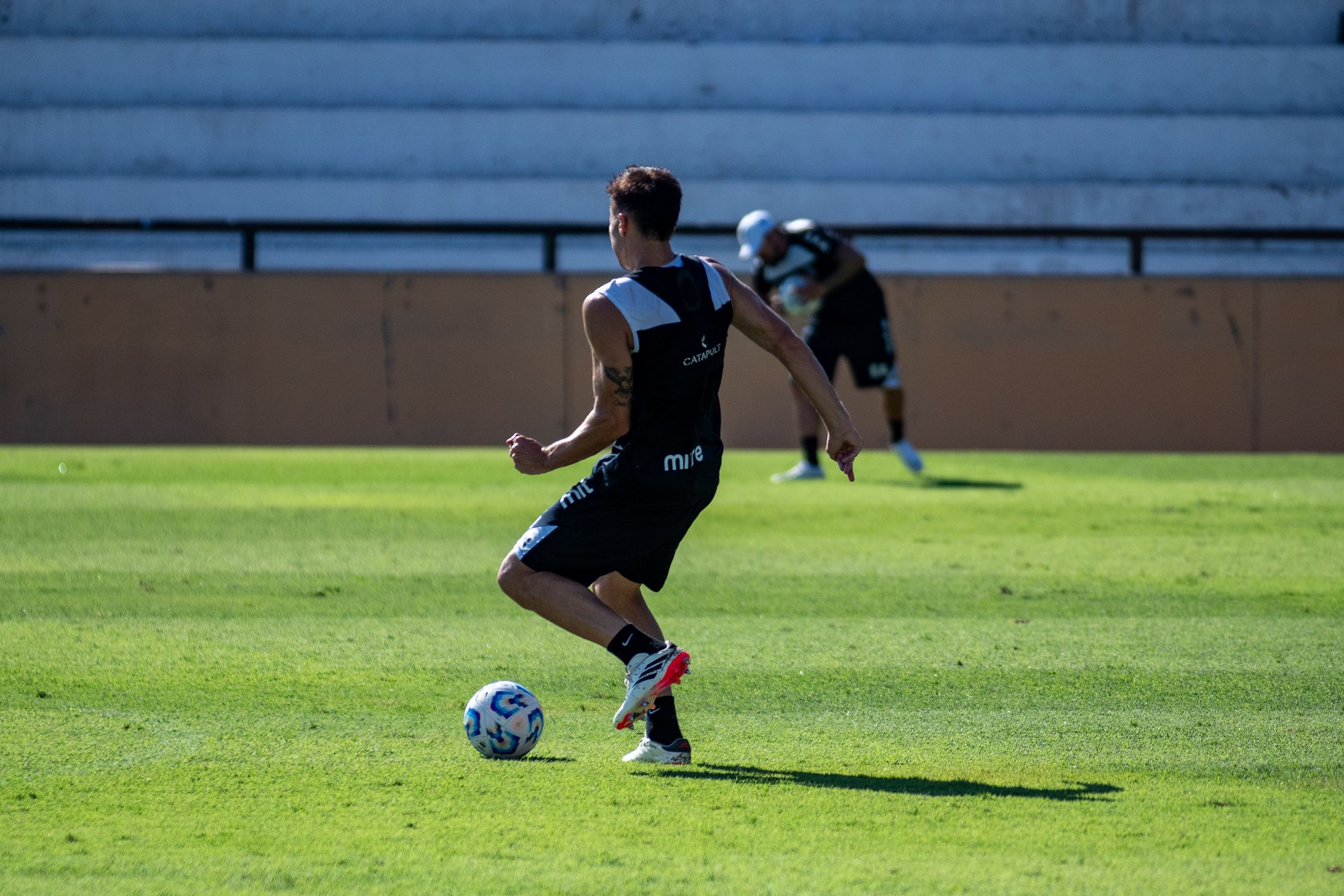
But the real revolution came with GPS tracking. In 1999, Australian researchers Shaun Holthouse and Igor van de Griendt began developing microtechnology at the Australian Institute of Sport, seeking to replace laboratory-based performance testing with wearable devices. By 2006, their company Catapult Sports had launched commercial GPS tracking vests. By 2014, Catapult was publicly listed on the Australian Stock Exchange, and its vests were worn by Real Madrid, Chelsea, and the Brazil national team.
What GPS Vests Actually Measure
Modern GPS vests track an extraordinary range of metrics: total distance covered, high-speed running distance (above 19.8 km/h), sprint count, acceleration and deceleration loads, player load (a composite measure of all body movements), and even estimated energy expenditure. Heart rate data is integrated to provide a complete picture of cardiovascular stress. FIFA approved the use of Electronic Performance and Tracking Systems (EPTS) during official matches starting around 2015, giving coaches real-time data from the touchline.
The impact on player welfare has been profound. Sports scientists can now identify when a player is at elevated injury risk based on their training load patterns. If a player's weekly load spikes above their personal threshold — known as the acute-to-chronic workload ratio — the medical staff can intervene before a muscle injury occurs. This single innovation has reduced soft-tissue injuries at elite level by an estimated 15-20%.
Recovery Science: The New Battleground
If GPS tracking represents the monitoring revolution, recovery science represents the intervention revolution. Modern football clubs and national teams now treat recovery as seriously as training itself.
Cryotherapy: Ice baths have been used since the 1970s, but whole-body cryotherapy chambers — exposing players to temperatures as low as -110°C for 2-3 minutes — became mainstream in the 2010s. The evidence for their effectiveness remains debated, but players consistently report reduced muscle soreness and improved subjective recovery.
Compression garments: Pneumatic compression devices like NormaTec boots use air pressure to massage limbs and accelerate blood flow, helping clear metabolic waste products from muscles. These are now standard equipment in every elite team's recovery room.
Sleep science: Perhaps the most underappreciated revolution. Teams now employ sleep scientists who monitor players' sleep patterns using wearable devices, design travel schedules to minimize jet lag, and even specify room temperatures and blackout requirements in team hotels. Research consistently shows that sleeping fewer than 8 hours increases injury risk by approximately 70%.
Nutrition: The era of pre-match steak dinners ended long ago. Modern players follow precisely calibrated nutrition plans — carbohydrate loading before matches, protein timing for recovery, hydration protocols with electrolyte monitoring. At the 2022 World Cup in Qatar, teams brought their own chefs to ensure nutritional standards were maintained.
The Five-Substitution Rule: A Fitness-Driven Change
Perhaps no rule change better illustrates football's fitness evolution than the permanent adoption of five substitutions. The journey to this rule tells the story of football's changing physical demands:
- 1958: Substitutions officially added to the Laws of the Game — initially only for injured players
- 1970: First substitutes allowed in World Cup matches (2 per team)
- 1995: Three substitutions permitted in normal time
- 2016: Fourth substitute introduced in extra time (UEFA Euro)
- 2020: Temporary five-substitution rule adopted during COVID-19 fixture congestion
- 2022: Five substitutions made permanent across all top-level competitions
The rule change was driven by data. Sports scientists had long argued that three substitutions were insufficient for managing player workloads, especially in tournaments with compressed schedules. The data showed that injury rates increased significantly in the final 15 minutes of matches, when tired players were most vulnerable. Five substitutions allow managers to refresh their lineup without sacrificing tactical structure.
2026: The Most Physically Demanding World Cup Ever
The 2026 FIFA World Cup represents the ultimate test of football fitness science. The numbers are staggering:
- 48 teams (up from 32), producing 104 matches — a 62.5% increase from 2022
- 39-day tournament (June 11 – July 19), the longest in World Cup history
- 8 matches for teams reaching the semifinals (up from 7)
- 16 venues across three countries spanning four time zones
- 26-player squads (expanded from the traditional 23 to accommodate the physical demands)
The geographic spread alone is a fitness challenge. A team playing group matches in Los Angeles, then traveling to Dallas for the Round of 32, then to New York for the Round of 16, covers thousands of kilometers with multiple time zone changes. Add in temperatures that have reached 32-39°C (90-102°F) at several venues — conditions that prompted Queen's University Belfast to warn FIFA about heat risks as early as January 2025 — and the physical demands become clear.
FIFA responded with mandatory three-minute hydration breaks in every half, announced in December 2025. These breaks, while disrupting match momentum, are a direct acknowledgment that modern football's physical intensity — combined with environmental stress — pushes human bodies to their limits. In the first matchday alone, there were 170 shots between the hydration break and halftime, compared to 115 from kickoff to the break — evidence that the cooling-off period genuinely affects performance patterns.
New anti-time-wasting rules add another physical dimension: 10-second substitution clocks (substituted players must exit within 10 seconds or their replacement waits a minute) and 5-second restart limits for throw-ins and goal kicks. These rules are designed to increase effective playing time, which means more running, more sprinting, and more physical stress across 90+ minutes.
From 1930 to 2026: By the Numbers
| Metric | 1930s–1960s | 2026 |
|---|---|---|
| Average distance per player per match | ~6 km | ~10.5 km |
| High-speed sprints per match | ~15 | ~55-70 |
| Substitutions allowed | 0 (until 1970) | 5 (+1 in extra time) |
| Squad size | ~18-20 | 26 |
| Tournament matches | 18 (1930) | 104 |
| Sports science staff per team | 0 | 8-12 |
What This Means for Predictions
Understanding football's fitness evolution isn't just a history lesson — it's a prediction tool. Teams with deeper squads, better sports science infrastructure, and more experienced fitness staff have a measurable advantage in tournament football. This advantage is magnified in 2026's expanded format.
Consider this: 29% of goals at the 2022 World Cup came after the 75th minute. With five substitutions allowing fresh legs in the final quarter of matches, late goals have become more common — and more predictable. Teams that manage their substitutions intelligently, using sports science data to time their changes, consistently outperform those that don't.
The heat factor at 2026 venues adds another variable. Teams from cooler climates (Northern Europe, for example) may struggle more than teams accustomed to warm conditions. Squad depth matters more than ever — a team with 26 genuinely competitive players can rotate through a 39-day tournament far more effectively than one relying on 13-14 starters.
Key Takeaways
- Football fitness has transformed from an afterthought (smoking, drinking, amateur training) to a billion-dollar science involving GPS tracking, cryotherapy, sleep monitoring, and AI-designed recovery protocols.
- The five-substitution rule — made permanent in 2022 — was driven by sports science data showing that three subs were insufficient for managing player workloads in modern football's intensity.
- The 2026 World Cup is the most physically demanding tournament ever: 48 teams, 104 matches, 16 venues across three countries, and temperatures reaching 39°C at some grounds.
- Squad depth, sports science infrastructure, and heat acclimatization are now decisive factors in tournament predictions — as important as tactical systems or individual talent.
- Late goals (after the 75th minute) now account for nearly 30% of all World Cup goals, making fitness management and substitution timing critical prediction variables.