2026年7月16日 · 11 分钟阅读 · season-preview
World Cup 2026 Final — Spain vs Argentina: Two Giants, One Trophy, and 82,000 Fans at MetLife
July 16, 2026 · 10 min read
After 39 days, 102 matches, and 297 goals across three nations, the 2026 FIFA World Cup reaches its crescendo on Saturday, July 19. Spain and Argentina — two footballing philosophies, two completely different knockout-stage journeys — will walk onto the FieldTurf at MetLife Stadium in East Rutherford, New Jersey, with 80,663 fans and a global audience of billions watching. This is the final nobody predicted in June, and the final everyone deserves in July.
How Spain Stormed Through the Knockout Stage
Spain's path to the final has been the most convincing of any team in this tournament. Luis de la Fuente's side won all four knockout matches without needing extra time or penalties, outscoring opponents 8-2 along the way. Their football has been a masterclass in controlled aggression — patient in build-up, ruthless in the final third, and disciplined without the ball.
It started with a statement. In the Round of 32, Spain dismantled Austria 3-0 at SoFi Stadium in Inglewood, with Mikel Oyarzabal scoring twice (36', 89') and Pedro Porro adding a third (66'). The performance was so dominant that Austria, a team that had impressed in the group stage, never looked like competing.
The Round of 16 brought the first real test — a Iberian derby against Portugal. This was a cagey, tactical affair settled by a single goal, with Spain's defensive organization neutralizing Cristiano Ronaldo and the Portuguese attack. It was the kind of 1-0 win that champions grind out when the occasion demands.
The quarter-final against Belgium was harder than the scoreline suggests. Charles De Ketelaere gave Belgium the lead in the 41st minute, and for a stretch in the second half, Spain looked rattled. But Fabián Ruiz equalized on the half-hour mark, and Mikel Merino's 88th-minute winner sent Spain through with the kind of late drama that has defined this knockout stage.
Then came the semi-final against France — and Spain's most complete performance of the tournament. A 2-0 victory in Arlington was built on suffocating pressing, quick transitions, and the kind of technical superiority that reminded the world why Spanish football remains the gold standard. Oyarzabal's tournament tally now stands at five goals, putting him among the top scorers, and the midfield trio of Pedri, Gavi, and Fabián Ruiz has been arguably the best unit at the World Cup.
Argentina's Gritty Road Back to the Final
If Spain's path has been a procession, Argentina's has been a war. Lionel Scaloni's defending champions have played four knockout matches — and three of them went to extra time. They've conceded seven goals, scored eleven, and needed every ounce of Lionel Messi's genius to survive.
The Round of 32 against Cape Verde was supposed to be straightforward. It was anything but. After Messi opened the scoring in the 29th minute, Cape Verde equalized through D. Duarte in the 59th minute and took the match to extra time. It took a Lautaro Martínez goal in the 92nd minute and an own goal from Diney in the 111th minute to seal a 3-2 win that left Argentina gasping.
The Round of 16 against Egypt was even more dramatic. Egypt led twice — through Ibrahim (15') and Ziko (67') — and Argentina needed three goals in the final 11 minutes plus stoppage time to survive. Cristian Romero pulled one back in the 79th minute, Messi equalized in the 83rd, and Enzo Fernández completed the comeback in the 92nd minute. It was 3-2 at the final whistle, and the scenes in Atlanta were delirious.
The quarter-final against Switzerland followed the same script. Alexis Mac Allister gave Argentina an early lead in the 10th minute, but Dan Ndoye equalized in the 67th. Extra time again — and again Argentina found a way. Julián Álvarez struck in the 112th minute, and Lautaro Martínez sealed it in the 120+1st minute. Three goals in extra time across two matches. Argentina's bench and their ability to find late winners have been the story of this tournament.
The semi-final against England was supposed to be the test Argentina couldn't pass. England had been the most defensively solid team in the knockout stage, conceding just once in three matches. But Argentina found the net twice — once through the brilliance of Messi, once through the relentless pressing that Scaloni demands — and held on for a 2-1 win in Atlanta. Jude Bellingham's two goals for England (45+2', 93') were not enough.
The Tactical Chess Match: Possession vs Pragmatism
This final is a study in contrasts. Spain under De la Fuente play a modernized version of tiki-taka — high possession, quick vertical passes, and an emphasis on controlling the tempo through midfield dominance. They average the highest possession rate in the tournament and have been the most efficient team in converting chances.
Argentina under Scaloni are pragmatic. They don't need the ball to win. Their strength lies in defensive transitions, individual moments of brilliance from Messi and Álvarez, and an almost supernatural ability to find goals in the dying minutes. They've scored five goals after the 80th minute in the knockout stage alone.
The midfield battle will be decisive. Spain's Pedri and Gavi will try to dictate tempo and control the ball in the middle third. Argentina's Enzo Fernández and Rodrigo De Paul will press high, disrupt rhythm, and look to release Messi into space on the counter. If Spain can maintain 60%+ possession and keep Argentina pinned back, they'll create chances. If Argentina can win the ball high and transition quickly, Messi will find the gaps.
Set pieces could also be a factor. Argentina have scored from dead-ball situations throughout the tournament, with Romero and Lautaro Martínez both dangerous in the air. Spain's Porro and Merino offer a similar threat from wide positions and corners. In a tight final, one set-piece moment could be the difference.
Key Players to Watch
Lionel Messi (Argentina) — 8 Goals, Chasing History
The numbers tell the story: eight goals in this tournament, tied with Kylian Mbappé for the Golden Boot lead. At 39 years old, Messi is playing his fifth and almost certainly final World Cup. A second consecutive title would cement his legacy as the greatest to ever play the game. He's scored in every knockout round — 29th minute against Cape Verde, 83rd minute against Egypt, and key contributions in the QF and SF. When the pressure is highest, Messi delivers.
Mikel Oyarzabal (Spain) — 5 Goals, The Silent Assassin
While Messi dominates the headlines, Oyarzabal has been Spain's most decisive attacker. Five goals in the knockout stage — including a brace against Austria and the opener against France — make him the tournament's fifth-highest scorer. His movement between the lines, his ability to arrive late in the box, and his composure in front of goal have made him the focal point of Spain's attack.
Pedri (Spain) — The Midfield Metronome
If Spain control this final, it will be because Pedri controls the midfield. His passing range, his press resistance, and his ability to find pockets of space between Argentina's defensive lines make him the key to unlocking Scaloni's low block. Against France in the semi-final, Pedri was involved in almost every dangerous Spain attack.
Enzo Fernández (Argentina) — The Comeback King
Fernández has scored in two of Argentina's four knockout matches — including the 92nd-minute winner against Egypt that might be the goal of the tournament. His box-to-box energy, his eye for a pass, and his ability to arrive in the box at the perfect moment make him Argentina's most complete midfielder. In a final that could go to extra time, his fitness and composure will be critical.
What's at Stake: History on Both Sides
This is the first time Spain and Argentina have met in a World Cup final. The historical weight of this match is enormous.
For Argentina, a victory would mean a fourth World Cup title — and a second consecutive one, something achieved only by Brazil (1958, 1962) and Italy (1934, 1938). It would also confirm Messi's status as the tournament's all-time greatest player, with two titles, eight goals in a single edition, and a career that spans five World Cups.
For Spain, a victory would mean a second World Cup title, following their historic 2010 triumph in South Africa. It would also mark the culmination of a generational transition — from the Xavi-Iniesta era to the Pedri-Gavi era — and confirm De la Fuente as one of the great modern international managers.
Neither team has won a World Cup on American soil. Neither team has won a World Cup in a 48-team format. This is new territory for both, and the winner will write a chapter that can never be taken away.
The Venue: MetLife Stadium, East Rutherford
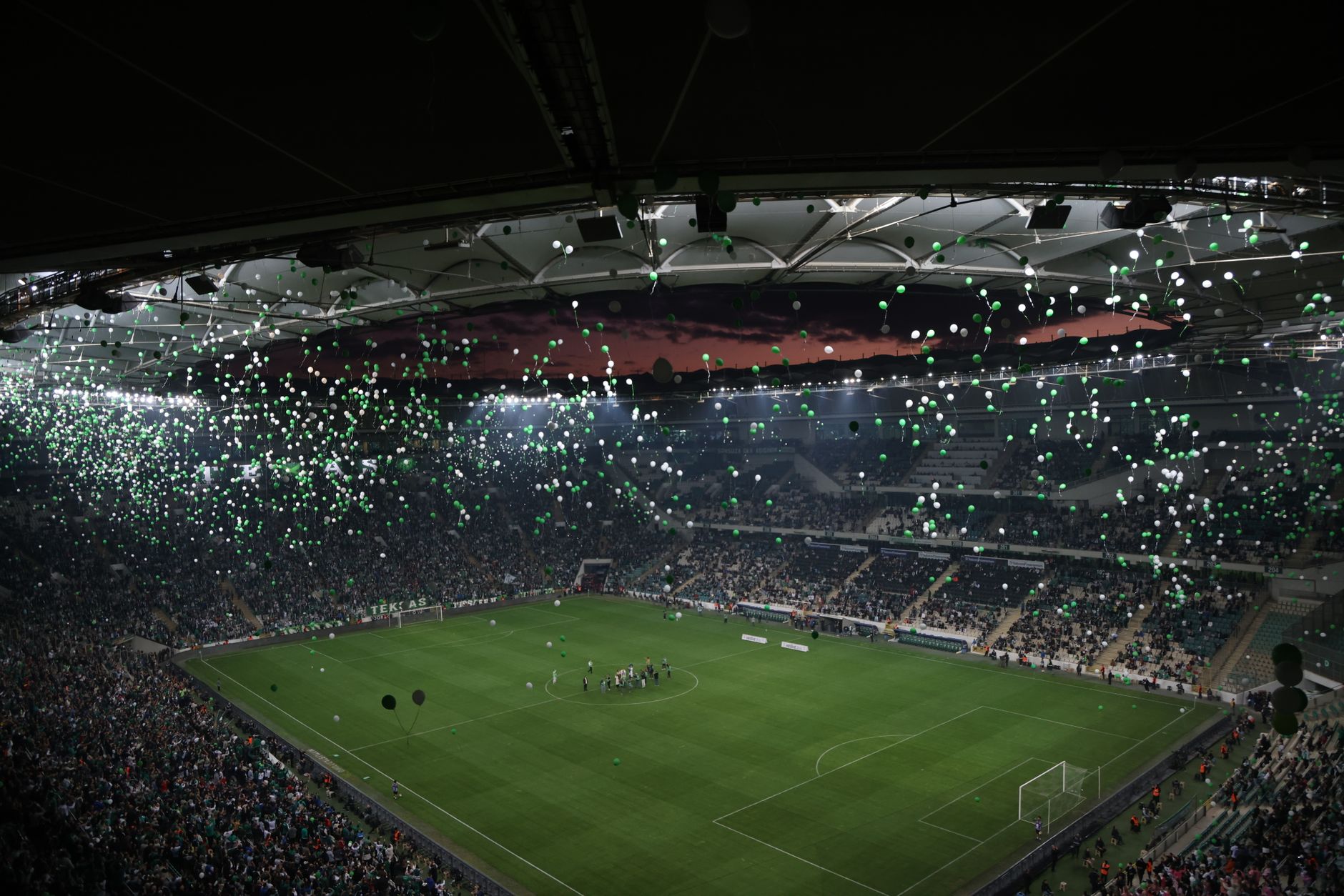
The final will be played at MetLife Stadium in East Rutherford, New Jersey — just across the Hudson River from Manhattan. With a capacity of 82,500 (80,663 configured for the World Cup), it is one of the largest stadiums in the United States and has hosted everything from Super Bowls to international concerts.
The FieldTurf CORE surface, installed in 2023, provides consistent playing conditions regardless of weather — an important factor in a tournament where heat and humidity have been significant variables. The four massive 30×118-foot video screens and 360-degree ribbon display ensure that every one of the 80,000+ fans will have a front-row experience.
MetLife's location in the New York metropolitan area means the final will be played in the media capital of the world. The global attention, the celebrity presence, and the sheer scale of the venue will make this one of the most watched sporting events in history.
The Golden Boot Race Adds Extra Drama
Beyond the trophy, there's an individual prize on the line. Messi and Mbappé are tied on eight goals for the Golden Boot. With France playing England in the third-place match on July 18, Mbappé has one more game to add to his tally. But if Messi scores in the final — and history suggests he will — he could claim the Golden Boot outright.
Erling Haaland (7 goals), Jude Bellingham (6 goals), and Harry Kane (6 goals) are also in contention but would need multiple goals in the remaining matches to challenge. The smart money is on Messi or Mbappé — and the final could be the decisive chapter in that race.
Prediction: A Final for the Ages
This has all the ingredients of a classic. Spain's possession dominance vs Argentina's counter-attacking brilliance. Pedri vs Messi. Oyarzabal vs Lautaro. De la Fuente vs Scaloni. The tactical chess match alone is worth the price of admission.
Spain have been the more consistent team — no extra time, no penalties, four clean performances. Argentina have been the more dramatic team — three extra-time matches, three comebacks, and the ever-present threat of Messi magic. The question is whether consistency or chaos wins out in a one-off final.
If this match goes to extra time — and with Argentina's track record, it might — the advantage shifts to Scaloni's side. They've played 120 minutes three times in this tournament and won all three. Spain haven't been tested in that way. Fatigue, experience in pressure moments, and Messi's ability to produce something from nothing could be the difference.
Key Takeaways
- Spain's dominance: Four knockout wins without extra time or penalties, 8-2 aggregate scoreline, the tournament's most complete team.
- Argentina's resilience: Three extra-time wins, five goals after the 80th minute, and Messi's eight goals driving the campaign.
- Tactical clash: Spain's possession game vs Argentina's counter-attacking pragmatism — the midfield battle will decide the final.
- Historic occasion: First-ever Spain vs Argentina World Cup final, with Argentina chasing a fourth title and Spain a second.
- Golden Boot on the line: Messi (8 goals) tied with Mbappé — a goal in the final could seal the individual award.
- MetLife Stadium: 80,663 fans, FieldTurf surface, New York City backdrop — the biggest stage in world football.
How to Follow the Final on FanPick
The World Cup 2026 final kicks off at 6:00 p.m. local time (ET) on Saturday, July 19 at MetLife Stadium. Head to FanPick to make your final prediction — will it be Spain's possession game or Argentina's counter-attacking brilliance that lifts the trophy? Use the Match Analysis feature to study the tactical breakdown, check the Community Vote to see how 250,000+ fans are leaning, and lock in your pick before kickoff.
Whatever happens, this final promises to be one for the ages. Two footballing giants, one trophy, and 39 days of World Cup drama distilled into 90 (or 120) minutes. Don't miss it.